A beautiful garden can change the entire feel of your home. It can make your outdoor space more relaxing, improve curb appeal, support wildlife, and give your family a peaceful place to enjoy fresh air. The best part is that you do not need a huge backyard or an expensive landscaping budget to create one.
This complete guide to decoradhouse garden tips by decoratoradvice is designed for homeowners, beginners, and garden lovers who want practical ideas that actually work. Whether you have a backyard, front yard, patio, balcony, rooftop, or small side garden, the right planning can turn your space into a healthy, stylish, and easy-to-maintain outdoor area.
Instead of only focusing on decoration, this guide explains how to plan your garden, choose the right plants, improve soil, arrange your layout, water correctly, add lighting, use containers, avoid common mistakes, and maintain your garden through every season.
These recommendations are based on practical home gardening principles, including sunlight mapping, soil preparation, climate-based plant selection, water management, layout balance, and seasonal care. The goal is simple: create a garden that looks good, grows well, and fits your lifestyle.
Quick Answer: What Are Decoradhouse Garden Tips by DecoratorAdvice?

Decoradhouse garden tips by decoratoradvice are practical gardening and outdoor design ideas that help homeowners create beautiful, functional, and easy-to-maintain gardens. These tips focus on planning first, choosing plants that match your climate, improving soil, using smart layouts, adding outdoor decor, and maintaining the garden throughout the year.
In simple words, the idea is to design a garden that is not only attractive but also realistic for your space, budget, climate, and daily routine.
Quick Garden Improvement Table
| Garden Goal | Best Tip | Why It Works |
| Low maintenance | Choose native or climate-friendly plants | They need less water, fertilizer, and care |
| Small space | Use vertical planters and containers | Saves floor space and adds greenery |
| Better plant growth | Improve soil before planting | Healthy soil supports stronger roots |
| Year-round beauty | Mix seasonal flowers, shrubs, and evergreens | Keeps the garden attractive in every season |
| Water savings | Use mulch and drip irrigation | Reduces evaporation and protects roots |
| Better design | Layer plants by height | Creates depth and a professional look |
| Budget makeover | Reuse pots, divide plants, and add mulch | Improves appearance without high cost |
Why Garden Planning Matters
Many people start gardening by buying beautiful plants first. This is one of the most common mistakes. A plant may look perfect in a nursery, but if it does not match your sunlight, soil, space, or weather, it may struggle after a few weeks.
A well-planned garden helps you:
- Save money on unnecessary plants
- Avoid overcrowding
- Reduce watering problems
- Improve plant health
- Create a balanced design
- Make maintenance easier
- Increase curb appeal
- Build a more enjoyable outdoor space
Professional-looking gardens are not created by chance. They usually start with a clear plan.
Step 1: Understand Your Garden Space

Before buying plants, pots, lights, furniture, or tools, spend time observing your outdoor space. Even a small amount of planning can prevent expensive mistakes later.
Ask yourself:
- How many hours of sunlight does each area receive?
- Which corners stay shaded most of the day?
- Does water drain quickly after rain?
- Is the soil sandy, clay-based, or soft and loamy?
- Are there strong winds?
- Where do people usually walk or sit?
- Do you want a decorative garden, vegetable garden, or relaxing space?
- How much time can you realistically spend on maintenance?
These answers will guide every decision you make.
Step 2: Measure and Sketch Your Garden
You do not need a professional drawing. A simple rough sketch is enough.
Include:
- Existing trees
- Walls and fences
- Walkways
- Patios
- Water taps
- Drainage areas
- Seating areas
- Shaded corners
- Sunny spots
- Empty spaces for future planting
A sketch helps you see where everything should go before you spend money.
Step 3: Decide the Purpose of Your Garden
Every successful garden has a purpose. Your design should match how you want to use the space.
Relaxation Garden
A relaxation garden is perfect if you want peace, comfort, and beauty.
Add:
- Comfortable seating
- Fragrant flowers
- Soft outdoor lighting
- Shade plants
- A small water feature
- Calm colors like white, lavender, and soft pink
Family Garden
A family garden should be practical and safe.
Add:
- Open lawn area
- Safe pathways
- Durable plants
- Picnic seating
- Child-friendly corners
- Shaded sitting space
Vegetable and Herb Garden
A vegetable garden is useful if you want fresh produce at home.
Add:
- Raised beds
- Compost area
- Herb section
- Drip irrigation
- Sunny planting zones
- Clear walking paths
Pollinator Garden
A pollinator garden supports bees, butterflies, birds, and beneficial insects.
Add:
- Native flowers
- Bee-friendly plants
- Butterfly plants
- Birdbath
- Water bowl
- Avoid harsh pesticides
Many homeowners combine two or three of these styles in one outdoor space.
You may also like it:
Decoration Tips Decoradhouse From DecoratorAdvice Guide
Step 4: Study Sunlight Before Choosing Plants
Sunlight is one of the biggest reasons plants succeed or fail. Before planting, observe your garden in the morning, afternoon, and evening.
Full Sun Plants
Full sun means around 6 to 8 or more hours of direct sunlight daily.
Good choices include:
- Lavender
- Roses
- Tomatoes
- Basil
- Marigolds
- Sunflowers
- Coneflowers
- Zinnias
- Rosemary
Partial Sun Plants
Partial sun means around 3 to 6 hours of sunlight daily.
Good choices include:
- Hydrangeas
- Begonias
- Coral bells
- Astilbe
- Camellias
- Salvia
Shade Plants
Shade areas receive less than 3 hours of direct sunlight daily.
Good choices include:
- Ferns
- Hostas
- Peace lilies
- Snake plants
- Japanese forest grass
- Pothos
Matching plants to sunlight conditions is one of the simplest ways to grow a healthier garden.
Step 5: Choose Plants That Match Your Climate
A beautiful plant is not always the right plant. The best plants are the ones that naturally grow well in your local conditions.
Climate-friendly plants usually need:
- Less watering
- Less fertilizer
- Less pest control
- Less maintenance
- Fewer replacements
Native plants are often a smart choice because they are already adapted to local weather, soil, and seasonal changes.
Best Low-Maintenance Plants for Beginners
If you are new to gardening, start with plants that are easy to grow and forgiving.
Easy Flowers
- Marigolds
- Zinnias
- Petunias
- Coneflowers
- Black-eyed Susans
- Lavender
Easy Shrubs
- Boxwood
- Spirea
- Hydrangea
- Juniper
- Dwarf evergreens
Easy Herbs
- Mint
- Basil
- Thyme
- Rosemary
- Oregano
- Parsley
Easy Succulents
- Aloe vera
- Jade plant
- Echeveria
- Sedum
- Haworthia
These plants are great for beginners because they usually require less attention while still giving strong visual results.
Step 6: Improve Your Soil Before Planting

Healthy soil is the foundation of a healthy garden. Even expensive plants can fail in poor soil.
Good soil provides:
- Nutrients
- Oxygen
- Moisture retention
- Drainage
- Beneficial microorganisms
- Strong root support
Before planting, improve your soil with organic matter.
Good options include:
- Compost
- Aged manure
- Leaf mold
- Organic mulch
- Worm castings
If possible, do a soil test. A soil test can tell you the pH level, nutrient deficiencies, and whether your soil needs improvement.
Soil Types and What They Need
| Soil Type | Common Problem | Best Improvement |
| Sandy soil | Dries out quickly | Add compost and organic matter |
| Clay soil | Holds too much water | Add compost and improve drainage |
| Loamy soil | Usually balanced | Maintain with compost and mulch |
| Compacted soil | Poor root growth | Loosen soil and add organic matter |
Improving soil before planting saves time, money, and frustration later.
Step 7: Use Plant Layering for a Designer Look
One secret behind professional-looking gardens is layering. Instead of placing plants randomly, arrange them by height and purpose.
Back Layer
Use taller plants at the back.
Examples:
- Small trees
- Tall shrubs
- Bamboo
- Large ornamental grasses
- Climbing plants on trellises
Middle Layer
Use medium-height plants in the center.
Examples:
- Hydrangeas
- Lavender
- Salvia
- Roses
- Coneflowers
Front Layer
Use shorter plants at the front.
Examples:
- Creeping thyme
- Alyssum
- Petunias
- Ground covers
- Small herbs
This method creates depth, balance, and a more polished appearance.
Step 8: Create Natural Flow in the Garden
A garden should feel connected from one area to another. Random plant placement can make the space look messy.
To create flow, repeat:
- Similar colors
- Similar plant shapes
- Matching pots
- Repeated textures
- Similar pathway materials
- Balanced plant heights
Curved flower beds often look softer and more natural than perfectly straight lines. Repetition also makes a garden feel more organized and peaceful.
Step 9: Plan for All Four Seasons
Many gardens look beautiful in spring but empty in winter. A better garden design includes plants that offer interest throughout the year.
Spring Interest
- Tulips
- Daffodils
- Crocuses
- Pansies
- Fresh herbs
Summer Interest
- Roses
- Lavender
- Daylilies
- Zinnias
- Sunflowers
Autumn Interest
- Japanese maple
- Ornamental grasses
- Chrysanthemums
- Sedum
- Warm-colored foliage
Winter Interest
- Holly
- Boxwood
- Evergreen trees
- Decorative branches
- Winter containers
A four-season plan keeps your garden attractive all year.
Step 10: Use Raised Beds for Better Plant Growth
Raised beds are one of the most practical garden upgrades. They make the garden look cleaner while improving growing conditions.
Benefits of raised beds include:
- Better drainage
- Less soil compaction
- Easier weed control
- Better soil quality
- Warmer soil in spring
- Easier gardening for your back
Popular raised bed materials include:
- Cedar wood
- Bricks
- Natural stone
- Concrete blocks
- Recycled composite boards
Raised beds are especially useful if your yard has poor soil or drainage problems.
Step 11: Try Container Gardening for Small Spaces
Container gardening is perfect for balconies, patios, rooftops, decks, and front porches. It gives you flexibility because you can move plants around when needed.
Best places for containers:
- Balcony corners
- Patio edges
- Entryways
- Decks
- Rooftops
- Small courtyards
- Windowsills
Best Container Plants
| Plant Type | Good Options |
| Flowers | Petunias, geraniums, begonias, pansies |
| Herbs | Basil, mint, parsley, rosemary, thyme |
| Vegetables | Tomatoes, peppers, lettuce, spinach |
| Green plants | Snake plant, pothos, fern, peace lily |
| Succulents | Aloe vera, jade plant, echeveria, sedum |
Always choose containers with drainage holes. Poor drainage can cause root rot.
Step 12: Use Vertical Gardening to Save Space
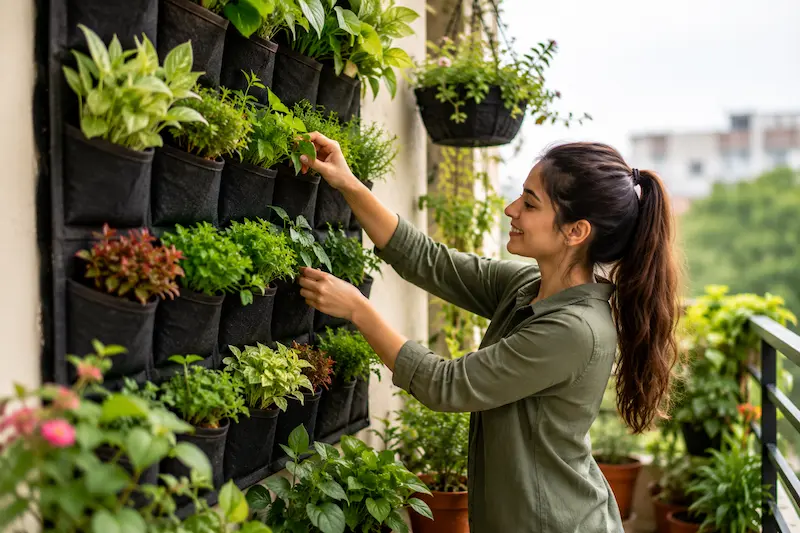
Vertical gardening is one of the best solutions for small gardens. It helps you grow more plants without using much floor space.
Creative vertical garden ideas include:
- Wall-mounted planters
- Hanging baskets
- Wooden pallet gardens
- Trellises
- Ladder shelves
- Pocket planters
- Fence-mounted pots
- Vertical herb gardens
Vertical gardening works especially well for balconies, patios, narrow side yards, and small backyards.
Step 13: Water Your Garden the Right Way
Watering seems simple, but it is one of the most common reasons plants fail. Too much water can damage roots, while too little water can weaken plants.
Best watering practices:
- Water early in the morning
- Water deeply instead of lightly
- Focus water near the roots
- Avoid soaking leaves at night
- Check soil moisture before watering again
- Reduce watering after rain
- Group plants with similar water needs
Deep watering encourages stronger roots and helps plants survive hot weather.
Step 14: Install Drip Irrigation if Possible
A drip irrigation system can save time and water. It delivers water slowly and directly to plant roots.
Benefits include:
- Less water waste
- Reduced evaporation
- Healthier roots
- Fewer fungal problems
- Easier maintenance
- Better watering consistency
Although the setup cost is higher than a simple hose, it can save money and effort over time.
Step 15: Use Mulch to Protect Soil
Mulch is one of the easiest ways to improve a garden’s appearance and health.
Benefits of mulch:
- Holds soil moisture
- Reduces weeds
- Regulates soil temperature
- Protects roots
- Improves soil over time
- Gives flower beds a clean look
Good organic mulch options include:
- Pine bark
- Wood chips
- Straw
- Compost
- Shredded leaves
Apply mulch around 2 to 3 inches thick. Do not pile mulch directly against plant stems because it can cause rot.
Step 16: Fertilize Without Overfeeding

Plants need nutrients, but too much fertilizer can harm them. Overfeeding can burn roots, create weak growth, or reduce flowering.
Main plant nutrients:
- Nitrogen supports leafy growth
- Phosphorus supports strong roots
- Potassium supports flowers and fruit
Organic fertilizer options include:
- Compost
- Worm castings
- Fish emulsion
- Seaweed fertilizer
- Aged manure
Always follow product instructions and avoid fertilizing stressed plants during extreme heat.
Step 17: Add Outdoor Seating and Living Space
A garden should be more than something you look at. It should be a place you enjoy.
Outdoor living ideas include:
- Comfortable chairs
- Small dining table
- Outdoor sofa
- Hammock
- Fire pit
- Shade umbrella
- Garden bench
- Outdoor cushions
Arrange furniture so people can move easily. In small gardens, use foldable or compact furniture to save space.
Step 18: Add Outdoor Lighting for Beauty and Safety
Lighting makes your garden more useful in the evening and improves the mood of the space.
Good lighting ideas include:
- Solar pathway lights
- String lights
- Lanterns
- Spotlights for trees
- Deck lights
- Step lights
- Wall sconces
Warm white lights usually create a softer and more relaxing atmosphere than bright white lights.
Step 19: Create Garden Pathways
A pathway gives structure to your garden and guides visitors through the space.
Popular pathway materials include:
- Natural stone
- Gravel
- Brick
- Concrete pavers
- Wood chips
- Decorative stepping stones
Curved pathways often feel more natural, while straight pathways give a clean and modern look.
Step 20: Use Hardscaping for Structure
Hardscaping includes non-living garden features that add shape, function, and style.
Examples include:
- Patios
- Decks
- Pergolas
- Gazebos
- Retaining walls
- Garden arches
- Stone borders
- Decorative fencing
A good garden balances soft plants with hardscaping. Too many plants can feel crowded, while too much hardscaping can feel cold. Balance is key.
Budget-Friendly Garden Makeover Ideas
You do not need a large budget to improve your garden. Small upgrades can make a big difference.
Affordable ideas include:
- Paint old flower pots
- Divide mature plants
- Grow flowers from seeds
- Use recycled containers
- Add fresh mulch
- Build simple raised beds
- Install solar lights
- Create DIY stepping stones
- Use cuttings to grow new plants
- Rearrange existing pots
Fresh mulch, clean borders, and well-placed containers can instantly make a garden look better.
Easy DIY Garden Projects
DIY projects can make your garden feel personal and unique.
Try these ideas:
Painted Terracotta Pots
Refresh old pots with outdoor paint and use a consistent color theme.
Wooden Plant Stand
Display several potted plants without using too much floor space.
Hanging Herb Rack
Grow herbs near your kitchen or patio for easy access.
Stone Garden Border
Use natural stones to define flower beds.
DIY Bird Feeder
Attract birds while adding charm to your garden.
Pallet Planter
Turn an old wooden pallet into a vertical garden for flowers or herbs.
Most of these projects are affordable and beginner-friendly.
Choose the Right Garden Color Palette
Too many colors can make a garden look busy. A clear color palette makes the space feel more professional.
Soft and Relaxing Palette
Use:
- White
- Lavender
- Pale pink
- Light blue
- Soft green
Bright and Cheerful Palette
Use:
- Yellow
- Orange
- Red
- Purple
- Bright pink
Modern Garden Palette
Use:
- White flowers
- Green foliage
- Black planters
- Gray paving
- Natural wood
Repeating the same colors throughout the garden creates harmony.
Make a Small Garden Look Bigger
Even a small garden can feel spacious with smart design.
Use these tricks:
- Keep the center area open
- Use vertical planters
- Choose compact furniture
- Repeat similar plants
- Use light-colored pots
- Add mirrors on fences or walls
- Avoid too many decorations
- Use narrow raised beds
- Hang plants instead of placing everything on the floor
A small garden should feel open, clean, and calm.
Eco-Friendly Garden Tips
Sustainable gardening is better for your home, your plants, and the environment. It can also reduce long-term maintenance.
Easy eco-friendly ideas:
- Use compost instead of chemical fertilizers
- Collect rainwater for irrigation
- Plant native species
- Reduce plastic pots
- Use organic pest control
- Grow drought-tolerant plants
- Recycle garden waste into mulch
- Avoid harmful pesticides
An eco-friendly garden supports healthier soil, cleaner water, and local wildlife.
Attract Birds, Bees, and Butterflies
A lively garden supports pollinators and beneficial wildlife.
Plants that attract pollinators include:
- Lavender
- Coneflowers
- Bee balm
- Salvia
- Sunflowers
- Black-eyed Susans
- Milkweed
Ways to welcome wildlife:
- Add a birdbath
- Plant native flowers
- Avoid chemical pesticides
- Leave a small wild corner
- Add a butterfly feeder
- Provide shallow water bowls
Pollinators help flowers bloom and improve vegetable production.
Natural Pest Control Without Harsh Chemicals
Healthy gardens focus on prevention before chemicals.
Common garden pests include:
- Aphids
- Whiteflies
- Caterpillars
- Slugs
- Spider mites
- Mealybugs
Natural control methods include:
- Spray diluted neem oil
- Use insecticidal soap
- Introduce ladybugs
- Remove damaged leaves
- Keep plants properly spaced
- Water early in the day
- Remove pests by hand when possible
Strong, healthy plants are naturally more resistant to pests.
Keep Garden Diseases Under Control
Plant diseases often spread because of poor airflow, overwatering, or dirty tools.
Prevention tips:
- Avoid overwatering
- Improve air circulation
- Prune dead branches
- Clean garden tools regularly
- Remove infected leaves
- Water the soil instead of the leaves
- Give plants enough space
Check your plants regularly so small problems do not become serious.
Seasonal Garden Maintenance Calendar
A garden needs different care in each season. This simple calendar can help you stay organized.
Spring
Spring is the season for fresh growth.
Tasks:
- Prepare garden beds
- Add compost
- Plant annual flowers
- Divide overcrowded perennials
- Prune damaged branches
- Refresh mulch
- Start vegetable seeds
Summer
Summer is the main growing season.
Tasks:
- Water deeply
- Deadhead flowers
- Fertilize when needed
- Control weeds
- Monitor pests
- Harvest vegetables
- Add shade for sensitive plants
Autumn
Autumn prepares your garden for cooler weather.
Tasks:
- Plant spring bulbs
- Remove fallen leaves
- Cut back tired perennials
- Add compost
- Divide mature plants
- Clean garden tools
- Protect delicate plants
Winter
Winter is quieter but still useful.
Tasks:
- Protect sensitive plants
- Cover raised beds
- Plan next year’s layout
- Sharpen tools
- Order seeds
- Clean pots and containers
- Check outdoor structures
Monthly Garden Checklist
Use this simple checklist every month.
- Check soil moisture
- Remove weeds
- Inspect plants for pests
- Prune damaged growth
- Clean outdoor furniture
- Refresh mulch if needed
- Fertilize according to plant needs
- Remove dead flowers
- Check irrigation systems
- Sweep patios and pathways
- Clean pots and containers
Regular small tasks prevent major garden problems later.
Common Gardening Mistakes to Avoid
Avoiding common mistakes can save time, money, and plants.
1. Buying Too Many Plants
Overcrowded gardens look messy and increase disease risk.
2. Ignoring Sunlight
Plants need the right light conditions to grow well.
3. Overwatering
Too much water can cause root rot.
4. Skipping Soil Preparation
Healthy plants start with healthy soil.
5. Choosing High-Maintenance Plants
Beginners should start with easy-care plants.
6. Using Too Much Fertilizer
More fertilizer does not always mean better growth.
7. Forgetting Future Growth
Small plants can become much larger over time.
8. Ignoring Regular Maintenance
Small weekly tasks keep the garden healthy and attractive.
Quick Solutions to Common Plant Problems
| Problem | Possible Cause | Solution |
| Yellow leaves | Overwatering | Reduce watering and improve drainage |
| Brown leaf edges | Underwatering or heat stress | Water deeply and add mulch |
| Slow growth | Poor soil | Add compost or organic fertilizer |
| No flowers | Not enough sunlight | Move plant to a sunnier spot |
| Wilting plants | Heat stress or dry soil | Water early and provide afternoon shade |
| White powder on leaves | Powdery mildew | Improve airflow and remove infected leaves |
| Holes in leaves | Caterpillars or slugs | Hand-pick pests or use natural control |
| Root rot | Poor drainage | Use pots with drainage holes and reduce watering |
Troubleshooting early helps keep your garden healthy.
Beginner Gardening Toolkit
You do not need expensive tools to start gardening. Begin with the basics.
Essential tools:
- Garden gloves
- Hand trowel
- Pruning shears
- Watering can
- Garden hose
- Rake
- Spade
- Bucket
- Garden fork
- Kneeling pad
Useful supplies:
- Compost
- Organic fertilizer
- Mulch
- Potting mix
- Plant labels
- Stakes
- Twine
Decorative items:
- Planters
- Solar lights
- Garden bench
- Decorative stones
- Outdoor cushions
Buy only what you need at first. You can add more tools as your garden grows.
Create a Kid-Friendly Garden
A garden can be a fun learning space for children.
Family-friendly ideas:
- Grow strawberries
- Plant sunflowers
- Build a fairy garden
- Create stepping-stone paths
- Add a chalkboard wall
- Grow herbs children can smell and touch
- Use safe, non-toxic plants
Gardening helps children learn responsibility, patience, and appreciation for nature.
Make Your Garden Safe for Pets
Pet owners should choose plants and products carefully.
Pet-friendly plants include:
- Sunflowers
- Snapdragons
- Marigolds
- Roses
- Basil
- Thyme
Pet safety tips:
- Avoid toxic plants
- Store fertilizers safely
- Keep compost bins covered
- Provide shaded resting areas
- Leave fresh water available
- Avoid sharp garden decorations
A safe garden allows every family member, including pets, to enjoy the space.
Why These Garden Tips Work
The best gardens are not always the biggest or most expensive. They are the ones that are carefully planned, planted wisely, and maintained consistently.
These garden tips work because they focus on the most important parts of successful gardening:
- Planning before planting
- Choosing climate-friendly plants
- Improving soil health
- Watering correctly
- Using mulch
- Creating a balanced layout
- Adding useful outdoor features
- Maintaining the garden through each season
With the right approach, any outdoor space can become more beautiful, practical, and enjoyable.
Key Takeaways
- Start with a clear garden plan before buying plants.
- Study sunlight, soil, drainage, and climate.
- Choose plants that match your space and weather.
- Improve soil with compost and organic matter.
- Use layering to create a professional look.
- Add raised beds, containers, or vertical planters for better use of space.
- Water deeply and use mulch to protect roots.
- Add seating, lighting, pathways, and hardscaping for function.
- Use sustainable methods to support wildlife and reduce waste.
- Follow seasonal maintenance to keep your garden healthy year-round.
Frequently Asked Questions
What are decoradhouse garden tips by decoratoradvice?
They are practical gardening and outdoor design ideas that help homeowners create beautiful, functional, and easy-to-maintain gardens. They include planning, plant selection, soil improvement, watering, decoration, and seasonal maintenance.
Are these garden tips good for beginners?
Yes. These tips are suitable for beginners because they focus on simple steps like choosing low-maintenance plants, improving soil, watering correctly, and starting with a manageable garden area.
How can I make a small garden look bigger?
Use vertical planters, keep the center area open, choose compact furniture, repeat similar plants and colors, and avoid overcrowding. Light-colored pots and mirrors can also make a small garden feel larger.
What are the best low-maintenance plants for a home garden?
Good low-maintenance options include lavender, boxwood, hostas, marigolds, rosemary, thyme, succulents, coneflowers, and ornamental grasses. Choose plants that match your sunlight and climate.
How often should I water my garden?
Most gardens do better with deep watering a few times per week instead of light watering every day. However, watering depends on weather, soil type, plant type, and season. Always check soil moisture before watering again.
Is mulch important for a garden?
Yes. Mulch helps retain moisture, reduce weeds, regulate soil temperature, protect roots, and improve the appearance of flower beds. Organic mulch also improves soil as it breaks down.
What is the easiest way to improve garden soil?
Add compost or organic matter before planting. Compost improves nutrients, drainage, moisture retention, and soil structure.
How do I keep my garden attractive all year?
Use a mix of spring flowers, summer blooms, autumn foliage, and evergreen plants. Also maintain your garden seasonally by pruning, mulching, watering, and cleaning up debris.
Can I create a beautiful garden on a low budget?
Yes. You can repaint old pots, grow plants from seeds, divide mature plants, reuse containers, add mulch, install solar lights, and create simple DIY garden projects.
What is the biggest mistake beginners make in gardening?
The biggest mistake is buying plants before understanding sunlight, soil, drainage, and space. Planning first helps avoid wasted money and unhealthy plants.
Final Thoughts
A beautiful garden does not happen by accident. It grows from smart planning, healthy soil, suitable plants, good watering habits, and regular care. With the right approach, even a small balcony, patio, or front yard can become a peaceful and attractive outdoor space.
These decoradhouse garden tips by decoratoradvice go beyond simple decoration. They help you create a garden that is practical, sustainable, beginner-friendly, and enjoyable in every season. Start with your garden conditions, choose plants that match your climate, improve your soil, and add personal touches that reflect your style.
Over time, your garden can become more than just an outdoor area. It can become a relaxing retreat, a family space, a wildlife-friendly corner, and one of the most beautiful parts of your home.