
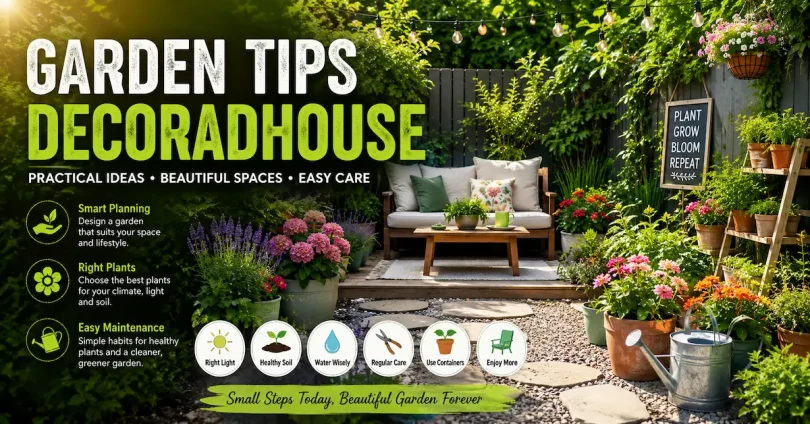

A garden can look full of potential and still feel difficult to manage. Plants may struggle in the wrong corners, small pots can create clutter, and seating often ends up somewhere nobody wants to use.
The good news is that improving an outdoor space does not require an expensive redesign. The most effective garden tips Decoradhouse homeowners can follow usually begin with simple decisions: understand the sunlight, choose suitable plants, create clear walking space, and make the garden comfortable enough to use every day.
Whether you have a large backyard, a narrow patio, a rooftop, or a small balcony, the goal remains the same. Your garden should feel healthy, welcoming, practical, and manageable.
You do not need to copy a picture-perfect garden from social media. Instead, work with your actual climate, budget, available space, and lifestyle.
Sometimes, a clear pathway, three well-placed planters, a shaded chair, and better lighting can improve a garden more than a costly landscape renovation.
Quick answer: The best garden tips Decoradhouse approach is to assess sunlight and drainage first, divide the space into useful zones, choose climate-suitable plants, improve the soil, and keep the layout easy to maintain.
What Do Garden Tips Decoradhouse Focus On?

Garden tips Decoradhouse focus on making outdoor spaces more attractive, comfortable, balanced, and practical.
The idea is not simply to add more plants or decorations. It is to create an outdoor area that works well for the people who use it.
A practical garden often includes:
- A clear layout
- Plants suited to the local climate
- Safe and open pathways
- Comfortable seating
- Proper drainage
- Manageable maintenance
- Consistent colors and materials
- Useful shade and lighting
The best garden design choices provide long-term value.
For example, a large decorative fountain may look impressive, but a shaded seating corner may be used every day. Twenty small pots may add color, but four large containers can look cleaner and require less frequent watering.
The goal is not to fill every empty corner. The goal is to make every part of the garden feel intentional.
You may also like it:
Decoradhouse Upgrade Tips by DecoratorAdvice
Decoration Tips Decoradhouse From DecoratorAdvice Guide
Start by Understanding the Garden You Already Have
Many garden problems begin before the first plant is purchased.
Homeowners often buy plants, furniture, or decorations without checking whether those items suit the space. A plant may need more sunlight than the garden receives. A large bench may block movement. A decorative pot may lack drainage holes.
Before making changes, observe your outdoor space for a few days.
Check the sunlight
Notice how sunlight moves through the area from morning to evening.
Different parts of the same garden may receive very different levels of light.
| Light condition | Approximate sunlight | Suitable approach |
| Full sun | 6 or more hours | Many herbs, vegetables, roses, and flowering plants |
| Partial sun | 3 to 6 hours | Mixed flowers, foliage plants, and selected herbs |
| Mostly shade | Less than 3 hours | Shade-tolerant foliage plants and selected flowers |
Do not rely on guesswork. A corner that looks bright in the morning may remain shaded for most of the day.
Check drainage
After rain or watering, look for areas where water collects.
Standing water can:
- Damage plant roots
- Make pathways slippery
- Attract mosquitoes
- Create unpleasant odors
- Cause soil erosion
If water remains in one area for a long time, consider improving the soil, raising the planting bed, clearing drainage outlets, or using containers.
Notice wind exposure
Balconies, rooftops, open patios, and exposed yards can be surprisingly windy.
Strong wind may:
- Dry plants quickly
- Break delicate stems
- Damage hanging baskets
- Move lightweight furniture
- Knock over narrow planters
Use heavy containers, secure hanging items, and choose wind-tolerant plants where necessary.
Decide how you want to use the garden
Before choosing plants or décor, decide what the garden should do for you.
You may want:
- A quiet tea corner
- A children’s play area
- A vegetable garden
- A low-maintenance green space
- A private reading spot
- An outdoor dining area
- A colorful entrance
- A wildlife-friendly garden
A garden does not need to serve every purpose. It only needs to support the activities that matter most to your household.
Create a Simple Garden Plan
Once you understand the space, divide it into clear zones.
Garden zones make outdoor areas easier to use and prevent them from feeling scattered.
Common zones include:
- A seating area
- A planting area
- A walkway
- A play space
- A herb or vegetable corner
- A storage area
- A decorative focal point
Even a small balcony can have separate zones. One side can hold plants, another can include a folding chair, and a wall can support vertical planters.
Keep movement easy
People should be able to move through the garden without stepping over pots, brushing against thorny plants, or shifting furniture.
A useful garden path should be:
- Wide enough for comfortable movement
- Stable in wet weather
- Easy to clean
- Free from tools and loose wires
- Suitable for children and older adults
Possible materials include:
- Gravel
- Brick
- Stepping stones
- Concrete
- Natural stone
- Outdoor tiles
Choose a material that matches the house, climate, maintenance level, and budget.
Leave breathing space
Empty space can improve a garden.
Do not feel pressured to cover every open section with plants, furniture, or decorations. Clear areas make the strongest features stand out and make maintenance easier.
A calm, organized garden often feels more attractive than an overcrowded one.
Choose a Garden Style That Matches Your Home
A garden looks more polished when it connects visually with the house.
You do not need to follow strict design rules, but choosing a general style helps you select suitable colors, furniture, planters, and materials.
Modern garden
A modern garden often includes:
- Clean lines
- Structured plants
- Simple planters
- Limited colors
- Minimal decoration
- Neat pathways
Black, grey, white, beige, and natural wood tones usually work well.
Cottage-style garden
A cottage garden feels softer, more colorful, and less formal.
It may include:
- Mixed flowers
- Curved pathways
- Climbing plants
- Wooden benches
- Herbs
- Vintage-style pots
This style suits homeowners who prefer a relaxed and natural appearance.
Low-maintenance garden
A low-maintenance garden focuses on durability and simplicity.
It often uses:
- Hardy plants
- Mulch
- Fewer garden beds
- Larger containers
- Drip irrigation
- Slow-growing shrubs
- Minimal lawn
This approach works well for busy households.
Edible garden
An edible garden combines beauty with practical use.
Popular options include:
- Mint
- Basil
- Coriander
- Parsley
- Rosemary
- Chilies
- Tomatoes
- Lettuce
- Spinach
Choose edible plants according to local temperature, sunlight, water availability, and growing season.
Select Plants for Your Climate and Lifestyle

Plant selection is one of the most important parts of garden planning.
A plant may look attractive in a nursery, but that does not mean it will perform well in your garden.
Before purchasing, check:
- Sunlight requirements
- Water needs
- Mature height and width
- Local temperature range
- Humidity needs
- Frost sensitivity
- Soil preferences
- Toxicity to pets or children
- Maintenance level
Choose climate-suitable plants
Plants adapted to the local climate usually require less water, protection, and maintenance.
Native or locally established plants can be a smart choice because they are often better suited to regional weather and soil conditions.
However, not every native plant is automatically easy to maintain. Some still require specific drainage, spacing, or pruning.
A reputable local nursery can help you choose plants that perform well in your area.
Match plants to your schedule
Be honest about how much time you can spend gardening.
If you have a busy routine, avoid filling the space with delicate plants that need daily watering, frequent feeding, or constant pruning.
For a lower-maintenance garden, consider:
- Hardy shrubs
- Drought-tolerant plants
- Perennials
- Ornamental grasses
- Larger containers
- Slow-growing varieties
If you enjoy gardening as a hobby, you may prefer seasonal flowers, herbs, vegetables, and plants that need regular care.
Check the mature size
Small nursery plants can grow much larger over time.
Before planting a tree or shrub, check its expected mature height and width. This helps prevent:
- Blocked windows
- Crowded beds
- Damaged pathways
- Excessive pruning
- Root conflicts
- Reduced airflow
Planning for mature size saves work and money later.
Improve the Soil Before Adding More Plants
Healthy soil supports stronger roots, better drainage, and more reliable plant growth.
If plants repeatedly struggle, the problem may be poor soil rather than poor gardening skills.
Signs of unhealthy soil
Watch for:
- Water sitting on the surface
- Hard or compacted soil
- Plants wilting despite regular watering
- Weak growth
- Yellow leaves
- Water draining too quickly
- Very little organic matter
- Frequent root problems
Add organic matter
Compost can improve many garden soils.
It may help:
- Improve soil structure
- Support beneficial organisms
- Hold moisture
- Improve drainage
- Add nutrients gradually
Mix compost into new beds or apply a suitable layer around established plants.
Avoid adding large amounts of fertilizer without knowing what the plants need. Excess fertilizer can burn roots, encourage weak growth, and wash into drains.
Avoid compacting the soil
Do not regularly walk across planting beds.
Compacted soil reduces the movement of air and water around roots. Use designated paths, stepping stones, or raised beds to keep foot traffic away from growing areas.
Use Mulch for Moisture and Weed Control
Mulch is one of the easiest ways to improve both the appearance and health of a garden.
It may help:
- Reduce weeds
- Slow moisture loss
- Protect roots from temperature changes
- Improve the appearance of beds
- Reduce soil splashing onto leaves
- Limit erosion
Organic mulch options include:
- Bark
- Compost
- Dry leaves
- Straw
- Wood chips
Inorganic options include:
- Gravel
- Pebbles
- Decorative stones
Keep mulch slightly away from plant stems and tree trunks. Piling mulch directly against the base can trap moisture and encourage rot.
Arrange Plants in Layers
Layering helps a garden look fuller, more balanced, and more natural.
Instead of placing every plant in one flat row, arrange them according to height, width, and texture.
A simple layered garden bed may include:
- A small tree or tall shrub at the back
- Medium plants in the middle
- Low-growing plants near the front
- Ground cover or mulch at the base
This approach creates depth and prevents small plants from looking lost in a large space.
Use foliage for year-round interest
Flowers are not the only source of beauty.
Foliage often remains attractive long after flowers have faded.
Try combining:
- Broad leaves with fine leaves
- Dark foliage with light foliage
- Upright plants with spreading plants
- Glossy leaves with soft textures
- Rounded shrubs with ornamental grasses
A strong foliage structure helps the garden look complete during different seasons.
Use Containers More Effectively
Containers are useful for balconies, rooftops, patios, entrances, and gardens with poor soil.
They also allow plants to be moved during extreme heat, cold, wind, or rain.
Choose fewer, larger containers
Many small pots can make an outdoor space look cluttered. Small containers also dry out quickly.
Larger containers usually:
- Hold moisture longer
- Give roots more space
- Create stronger visual impact
- Need less frequent rearranging
- Look cleaner in modern spaces
Group pots in odd numbers, such as three or five, for a more natural arrangement.
Use a simple container formula
A balanced container arrangement may include:
- One tall plant
- One medium flowering or foliage plant
- One trailing plant
This creates height, fullness, and softness.
Always make sure the container has adequate drainage holes.
Choose planter materials carefully
Common planter materials include:
- Terracotta
- Ceramic
- Plastic
- Fiberglass
- Concrete
- Metal
- Wood
Terracotta looks warm but may dry quickly. Concrete is durable but heavy. Plastic is lightweight but may fade. Metal can become very hot in direct sunlight.
Choose according to climate, budget, weight, location, and maintenance requirements.
Make Small Gardens Feel Bigger
Small gardens can feel spacious when the layout remains simple.
Useful garden tips Decoradhouse homeowners can use in compact spaces include:
- Keep the center area open
- Use vertical planters
- Add narrow shelves
- Choose folding furniture
- Use tall, slim containers
- Grow climbers on trellises
- Limit the color palette
- Use one clear focal point
- Avoid too many small decorations
Use vertical space
Walls, fences, and railings can support:
- Hanging pots
- Vertical herb gardens
- Trellises
- Wall-mounted planters
- Climbing plants
- Narrow plant shelves
Secure all wall-mounted items properly, especially on balconies and rooftops.
Repeat colors and materials
Repeating the same planter material, plant variety, or color in different parts of the garden creates visual continuity.
For example, three terracotta pots repeated along a wall usually look more intentional than several unrelated containers.
Add Seating Where It Will Actually Be Used
A garden becomes more valuable when it invites people to stay.
Before placing seating, consider:
- Shade
- Wind
- Privacy
- View
- Access
- Ground stability
- Distance from the house
A bench placed in direct afternoon heat may remain unused. The same bench under shade may become the most popular spot in the garden.
Choose furniture for the available space
For small spaces, consider:
- Folding chairs
- A bistro set
- A narrow bench
- A storage bench
- Stackable stools
For larger gardens, you may have space for:
- An outdoor dining table
- Lounge chairs
- Outdoor sofas
- A fire pit seating area
Choose weather-resistant materials and protect cushions during heavy rain unless they are specifically designed for outdoor use.
Create Shade for Comfort
Shade makes an outdoor space usable for more hours of the day.
Options include:
- Trees
- Pergolas
- Umbrellas
- Fabric canopies
- Retractable awnings
- Shade sails
- Climbing plants on frames
Make sure all structures are securely installed and suitable for local weather conditions.
For a small garden, a simple umbrella may be enough. For a larger space, a pergola can provide both shade and architectural structure.
Add Garden Lighting Safely
Outdoor lighting improves atmosphere, visibility, and safety.
Use lighting where it serves a clear purpose:
- Along pathways
- Near steps
- Around seating
- Close to entrances
- Beside focal plants
- Around outdoor dining areas
Warm lighting usually creates a softer and more comfortable effect than harsh white light.
Use solar lights carefully
Solar lights are convenient, but their performance depends on sunlight exposure and product quality.
Place them where they receive enough daylight. Do not rely on weak decorative solar lights for important steps, pathways, or security areas.
For wired lighting, use outdoor-rated products and qualified installation where necessary.
Create One Clear Focal Point
A focal point gives the eye a place to rest.
Possible focal points include:
- A large planter
- A bench
- A small tree
- A water bowl
- A sculpture
- A birdbath
- A flowering shrub
- A decorative wall feature
Choose a focal point that matches the size of the garden.
Too many focal points create visual competition. A compact garden may only need one large planter or a simple bench surrounded by greenery.
Don’t skip reading it:
Decoradhouse Renovation Tips from DecoratorAdvice
Decoradhouse Garden Tips by DecoratorAdvice Guide
Improve Privacy Without Closing the Space
Privacy can make a garden feel more relaxing and usable.
You do not always need to block every boundary. Focus on the area where privacy matters most, such as the seating corner.
Privacy options include:
- Tall plants in containers
- Trellises with climbers
- Bamboo-style screens
- Lattice panels
- Hedges
- Outdoor curtains
- Small trees
- Layered shrubs
Avoid making a small space feel dark or enclosed. Partial screening often creates better results.
Use Water More Efficiently
Smart watering supports healthier plants, saves time, and reduces waste.
Water the soil, not the leaves
Aim water near the base of the plant.
Repeatedly wetting leaves can encourage disease in some conditions, especially when foliage stays damp overnight.
Water deeply when appropriate
Light surface watering may encourage shallow roots.
Deeper watering can encourage roots to grow downward, although the correct method depends on the plant, soil, weather, and container size.
Water in the morning
Early morning is often a practical watering time because:
- Temperatures are cooler
- Less water evaporates
- Plants receive moisture before daytime heat
- Leaves have time to dry
Group plants by water needs
Place plants with similar moisture requirements together.
This makes watering easier and reduces the risk of giving one plant too much water while another receives too little.
Consider drip irrigation
Drip irrigation can deliver water directly to the soil and reduce waste.
Inspect the system regularly for leaks, blocked outlets, and uneven watering.
Build a Garden That Is Easy to Maintain

A garden should match your routine.
If maintenance feels overwhelming, simplify the design.
Low-maintenance strategies include:
- Reducing large lawn areas
- Choosing hardy plants
- Using mulch
- Installing simple irrigation
- Using larger containers
- Planting perennials
- Grouping plants by water needs
- Storing tools nearby
- Avoiding overly complex beds
Simple garden maintenance schedule
| Frequency | Recommended tasks |
| Weekly | Check soil moisture, remove small weeds, inspect for pests |
| Monthly | Clean pots, trim dead growth, check drainage |
| Seasonally | Refresh mulch, replace seasonal plants, inspect furniture |
| Yearly | Review the layout, repair paths, divide overcrowded plants |
Small, regular tasks are easier than waiting until the garden becomes overgrown.
Make Gardening Safer for Children and Pets
Safety is often missing from general garden advice.
Before planting or decorating, consider who uses the outdoor space.
Check plant toxicity
Some common garden plants can be harmful if eaten by pets or children.
Research unfamiliar plants before purchasing them. A local nursery, veterinarian, or trusted horticultural source can help confirm whether a plant is suitable.
Secure unstable items
Secure:
- Tall planters
- Hanging baskets
- Trellises
- Garden shelves
- Heavy ornaments
- Outdoor lighting cables
Avoid sharp metal edging near play areas.
Store garden products safely
Keep fertilizers, pesticides, tools, and plant treatments in a locked or inaccessible storage area.
Follow product instructions and never use more than the recommended amount.
Prevent standing water
Empty containers that collect rainwater.
Standing water may attract mosquitoes and create hygiene problems.
Follow Balcony and Rooftop Safety Rules
Balcony and rooftop gardens require additional planning.
Before adding large pots, planters, or raised beds:
- Check the weight capacity
- Use lightweight potting mix where suitable
- Protect surfaces from water damage
- Keep drainage outlets open
- Secure hanging items
- Prevent water from dripping onto lower properties
- Keep emergency access clear
- Use wind-resistant furniture
Do not assume a balcony can safely support several large soil-filled containers. Seek professional advice when structural weight is a concern.
Add Wildlife-Friendly Features
A garden can support birds, butterflies, bees, and other beneficial creatures.
You can make the space more wildlife-friendly by:
- Growing different flowering plants
- Reducing harsh chemical use
- Providing shallow water
- Planting shrubs for shelter
- Using locally appropriate plants
- Leaving a small natural corner
- Adding bird feeders where suitable
Clean water dishes regularly to prevent contamination and mosquito breeding.
A wildlife-friendly garden should remain safe, manageable, and appropriate for the local environment.
Budget-Friendly Garden Tips Decoradhouse Homeowners Can Use
You do not need to improve the whole garden at once.
Start with free or low-cost changes:
- Remove clutter
- Wash existing pots
- Sweep pathways
- Rearrange furniture
- Group plants together
- Prune dead growth
- Propagate plants
- Reuse suitable containers
- Exchange plants with friends
- Make compost where practical
Spend on the basics first
When working with a limited budget, prioritize:
- Healthy soil
- Suitable plants
- Drainage
- Mulch
- Safe pathways
- Comfortable seating
- Lighting and decoration
A healthy plant in a simple container usually adds more value than an expensive ornament placed beside a struggling plant.
Example garden budget allocation
A flexible budget may look like this:
- 30% for plants
- 20% for soil, compost, and mulch
- 15% for containers or raised beds
- 15% for seating
- 10% for lighting
- 10% for tools and maintenance
Adjust these percentages according to the condition of the garden.
A property with poor drainage may need more spending on structural improvements before plants or decorations.
Common Garden Mistakes to Avoid
Buying plants before checking conditions
A beautiful plant will not thrive in the wrong light, soil, or climate.
Assess the space before shopping.
Overcrowding plants
Plants need enough room to grow.
Crowding can reduce airflow and increase competition for water, nutrients, and sunlight.
Overwatering
More water does not always mean healthier growth.
Check the soil before watering and use pots with drainage holes.
Ignoring mature size
A small shrub may eventually become much larger than expected.
Check mature height and width before planting.
Using too many colors
A limited palette often looks more polished.
Repeat two or three main colors throughout the garden.
Adding too much decoration
Garden décor should support the plants rather than dominate them.
Choose fewer items with a practical or visual purpose.
Ignoring storage
Tools, hoses, empty pots, and soil bags can create clutter.
Use a storage bench, cabinet, shed, or screened corner.
Forgetting seasonal change
Some plants look attractive for only a short period.
Combine evergreen structure, foliage plants, seasonal flowers, and movable containers for longer-lasting interest.
A Simple 7-Day Garden Refresh Plan
You do not need to redesign everything in one weekend.
Use this seven-day plan to improve the garden gradually.
Day 1: Clear the space
Remove rubbish, broken pots, dead plants, and unused objects.
Sweep pathways and clean the furniture.
Day 2: Observe the conditions
Record sunlight, shade, drainage, wind, and areas that feel uncomfortable.
Day 3: Improve the soil
Add compost where appropriate, remove weeds, and loosen compacted surface soil carefully.
Day 4: Rearrange plants
Group containers, move plants to more suitable positions, and create clearer zones.
Day 5: Fix one practical problem
Repair a path, improve drainage, install a trellis, or organize tools.
Day 6: Add comfort
Introduce seating, shade, cushions, or a small table.
Day 7: Add finishing touches
Apply mulch, add lighting, or create one focal feature.
At the end of the week, the garden should feel cleaner, more organized, and easier to use.
A Practical Small-Garden Example
Imagine a narrow patio measuring approximately 8 by 12 feet.
It contains eight small pots, two unused chairs, and no clear walkway.
A practical improvement plan could include:
- Removing broken and empty pots
- Replacing eight small pots with three larger planters
- Keeping one folding chair in a shaded corner
- Adding a wall trellis for vertical planting
- Installing one warm light near the seating area
- Keeping the center walkway open
- Using one planter as the focal point
This approach reduces clutter, improves movement, and makes watering easier.
The example shows that a garden does not always need more items. Sometimes, it needs fewer and better-organized items.
Frequently Asked Questions
What are the best garden tips for beginners?
Start by observing sunlight, drainage, wind, and available space. Choose a few easy plants that suit the local climate. Improve the soil, use containers with drainage holes, and avoid buying too many plants at once.
How can I improve my garden without spending much money?
Clean the area, remove clutter, group pots, trim dead growth, refresh the soil, and add mulch. Rearranging items you already own can create a noticeable improvement.
How often should I water garden plants?
Watering frequency depends on the plant, weather, soil, container size, and sunlight. Check the soil before watering. Many plants benefit from deeper and less frequent watering, but individual needs vary.
How can I make a small garden feel bigger?
Keep the center open, use vertical planters, choose fewer large containers, limit colors, and select compact furniture. Avoid covering the floor with too many small pots.
What is the easiest way to create a low-maintenance garden?
Choose climate-suitable plants, use mulch, group plants by water needs, reduce large lawn areas, install simple irrigation, and use larger containers.
Are all garden plants safe for pets?
No. Some garden plants can be harmful to pets. Check each plant before purchasing it, and keep fertilizers, pesticides, and garden chemicals out of reach.
What should I spend money on first in a garden?
Start with drainage, healthy soil, compost, suitable plants, safe pathways, and practical seating. Decoration should come after the essential problems have been addressed.
How can I make a garden look professionally designed?
Use repeated colors, consistent materials, layered planting, clear pathways, one focal point, and enough open space. Avoid adding unrelated pots and decorations.
Final Thoughts
A comfortable and attractive garden grows from thoughtful decisions, not random purchases.
Start with the space you already have. Study the sunlight, soil, drainage, wind, and available room. Decide how you want to use the garden, then create a simple layout that supports that purpose.
Choose plants that match your climate and lifestyle. Improve the soil before adding more plants. Use clear pathways, suitable containers, comfortable seating, shade, and practical lighting.
Most importantly, keep the space manageable.
The best garden tips Decoradhouse homeowners can follow are often the simplest:
- Plan before buying
- Choose suitable plants
- Focus on comfort
- Avoid unnecessary clutter
- Improve the soil
- Water carefully
- Make one useful change at a time
A garden does not need to look perfect. It only needs to feel healthy, welcoming, safe, and easy to enjoy.
Editorial note: Plant needs vary according to species, soil, climate, and growing conditions. Confirm regional planting, toxicity, structural, and safety information with a reputable nursery, horticultural expert, veterinarian, or qualified professional where necessary.


