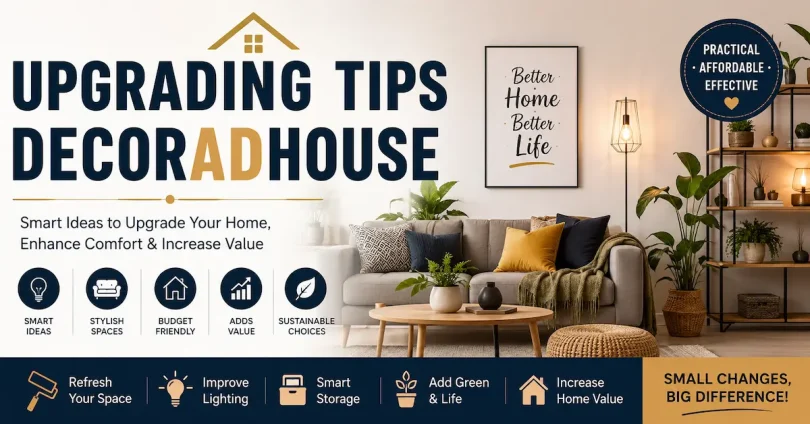

Improving your home does not always require a full renovation, a large budget, or weeks of construction. The best Upgrading Tips DecorAdHouse ideas focus on practical changes that improve comfort, appearance, storage, energy efficiency, and everyday functionality.
A room can feel completely different after a fresh coat of paint, better lighting, a smarter furniture layout, or a few carefully selected accessories. These changes may appear small, but together they can make a home look cleaner, brighter, more organized, and more valuable.
This complete guide covers affordable DIY projects, room-by-room upgrades, renter-friendly ideas, smart technology, sustainable improvements, project costs, expected completion times, common mistakes, and a step-by-step home upgrade roadmap.
Upgrading Tips DecorAdHouse at a Glance
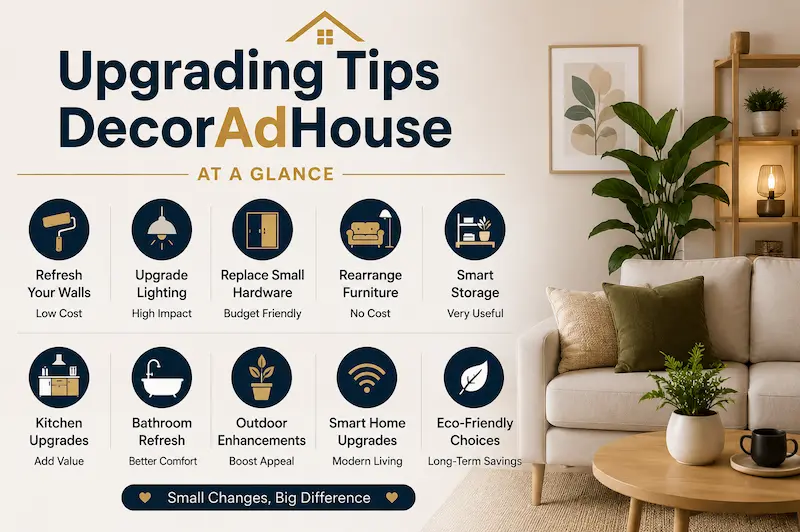
| Upgrade | Typical Cost | Time Needed | Difficulty | Potential Impact |
| Rearrange furniture | Free | 1–2 hours | Easy | High |
| Declutter a room | Free–$30 | 2–4 hours | Easy | High |
| Replace cabinet handles | $20–$100 | 1–2 hours | Easy | High |
| Upgrade lighting | $30–$250 | 30 minutes–3 hours | Easy | High |
| Paint a room | $50–$300 | 1–2 days | Medium | High |
| Add floating shelves | $30–$150 | 1–3 hours | Medium | Medium |
| Install a smart thermostat | $100–$350 | 30–90 minutes | Medium | High |
| Refresh a bathroom | $100–$500 | 1–3 days | Medium | High |
| Improve a patio | $150–$1,000 | 1–3 days | Medium | Medium |
| Replace flooring | $500–$5,000+ | 2–7 days | Hard | High |
Costs vary according to location, room size, product quality, and whether professional help is required.
What Is Upgrading Tips DecorAdHouse?
Upgrading Tips DecorAdHouse refers to practical home improvement strategies that help homeowners and renters create more attractive, comfortable, organized, and functional living spaces.
The approach is not limited to decorating. It combines interior styling with storage planning, energy efficiency, smart technology, maintenance, safety, and long-term value.
Common upgrades include:
- Interior painting
- Lighting improvements
- Better furniture placement
- Smart storage
- Kitchen refreshes
- Bathroom updates
- Outdoor enhancements
- Energy-saving improvements
- Smart home devices
- Renter-friendly temporary changes
- Seasonal maintenance
The main goal is to improve the home you already have without spending money on unnecessary work.
Why Small Home Upgrades Matter
Many people delay home improvement because they assume that meaningful changes require expensive renovations. In reality, homeowners often notice the biggest difference after completing several small, well-planned projects.
Small upgrades can provide:
- Better daily comfort
- More usable storage
- Improved lighting
- Lower energy consumption
- Better organization
- Increased visual appeal
- Stronger curb appeal
- Easier cleaning and maintenance
- Higher perceived property value
- A more personalized living space
For example, replacing yellowed light bulbs, removing unnecessary furniture, and repainting dark walls can make a room appear larger without changing its actual dimensions.
Start With a Home Upgrade Assessment
Before buying furniture, paint, lighting, or decorative accessories, inspect your home carefully.
Walk through every room and identify what is causing discomfort, wasted space, poor lighting, clutter, or inconvenience.
Ask yourself:
- Which room feels the most outdated?
- What causes frustration during daily routines?
- Where is storage lacking?
- Which areas feel dark or crowded?
- What needs repair before decoration?
- Which projects fit the available budget?
- Which changes can be completed safely without professional help?
- Are any improvements likely to increase resale or rental appeal?
Avoid starting several projects at once. Complete the most important upgrade first, review the result, and then move to the next project.
You may also like it:
Renovation Tips Decoradhouse: Smart Ideas to Transform Homes
Decoradhouse Upgrade Tips by DecoratorAdvice
Decoradhouse Renovation Tips from DecoratorAdvice
Home Upgrade Priority Checklist
| Upgrade Area | Priority | Difficulty | Suggested Budget Level |
| Repairs and safety issues | Urgent | Varies | Essential |
| Decluttering | High | Easy | Free or low |
| Lighting | High | Easy | Low to medium |
| Paint | High | Medium | Low to medium |
| Storage | High | Easy | Low to medium |
| Furniture layout | High | Easy | Free |
| Kitchen improvements | Medium | Medium | Medium |
| Bathroom improvements | Medium | Medium | Medium |
| Outdoor space | Medium | Easy to medium | Medium |
| Smart home devices | Optional | Easy | Medium |
| Major structural changes | Low unless necessary | Hard | High |
Repair leaks, electrical problems, structural damage, mold, broken fixtures, and unsafe surfaces before spending money on appearance.
What Should You Upgrade First?
A sensible upgrade order prevents wasted money and repeated work.
Recommended Home Upgrade Order
- Repair safety and maintenance problems.
- Declutter and remove unused items.
- Clean walls, floors, windows, and fixtures.
- Improve lighting.
- Paint walls and ceilings.
- Add storage.
- Rearrange or replace furniture.
- Upgrade kitchen and bathroom details.
- Add decorative elements.
- Improve outdoor areas.
- Install smart home technology.
- Create a seasonal maintenance schedule.
Decorating before repairing often leads to damaged finishes, repeated work, and higher costs.
Budget-Friendly Upgrading Tips DecorAdHouse
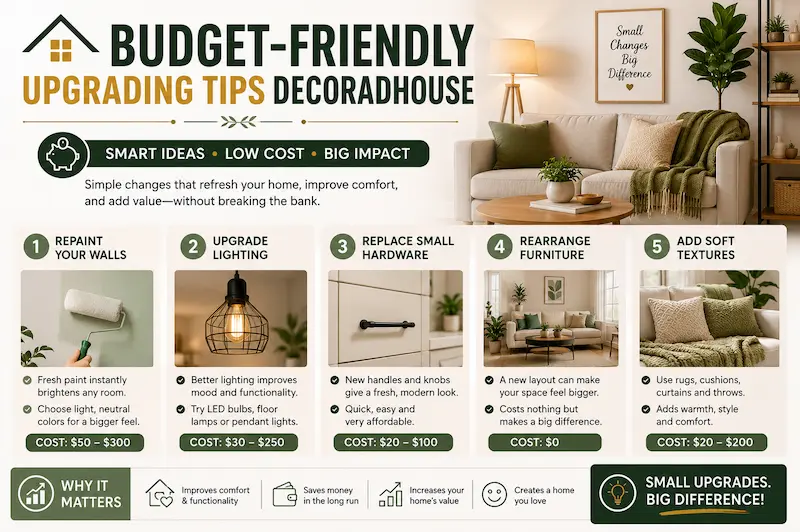
A limited budget should not prevent meaningful home improvement. The most effective low-cost upgrades usually improve more than one aspect of a room.
1. Repaint Walls and Ceilings
Fresh paint can cover marks, brighten dark rooms, and create a cleaner background for furniture and décor.
Popular versatile colors include:
- Warm white
- Cream
- Light beige
- Soft gray
- Sage green
- Muted blue
- Pale taupe
Before choosing a color, test a sample on more than one wall. Observe it in daylight, evening light, and artificial light because the appearance may change throughout the day.
Paint Upgrade Example
Before
- Dark beige walls
- Uneven touch-ups
- Heavy curtains
- Weak yellow lighting
After
- Warm white paint
- Clean trim
- Lighter curtains
- Layered LED lighting
The room may appear brighter, cleaner, and visually larger even when the furniture remains unchanged.
2. Improve the Lighting
Lighting affects colors, mood, visibility, productivity, and the perceived size of a room.
Use three lighting layers when possible:
- Ambient lighting: General room illumination
- Task lighting: Focused light for reading, cooking, or working
- Accent lighting: Decorative light for artwork, shelves, or architectural details
Useful lighting upgrades include:
- LED bulbs
- Floor lamps
- Table lamps
- Pendant lights
- Wall sconces
- Under-cabinet lights
- Motion-sensor lights
- Smart bulbs
- Rechargeable lamps
Warm white lighting generally works well in bedrooms and living rooms. Brighter neutral or cool lighting is more suitable for kitchens, bathrooms, workspaces, and utility areas.
3. Replace Small Hardware
Cabinet handles, drawer pulls, door knobs, switch plates, and hooks are inexpensive but visually noticeable.
Matching finishes across a room can make the design feel more coordinated. Common options include brushed nickel, matte black, brass, bronze, and stainless steel.
Measure the distance between existing screw holes before buying replacement handles.
4. Rearrange Furniture
A better furniture layout can improve movement, natural light, conversation, and visual balance at no cost.
Try:
- Opening blocked walking paths
- Moving large furniture away from windows
- Creating a defined conversation area
- Leaving space around doors
- Positioning seating toward a focal point
- Removing furniture that is too large for the room
- Using rugs to define separate zones
Measure the room before moving or purchasing large items.
5. Upgrade Soft Furnishings
Curtains, rugs, bedding, cushions, throws, and covers can quickly change the appearance of a room.
Choose two or three related colors instead of combining too many unrelated patterns. Texture can add interest without overwhelming the space.
Useful materials include:
- Linen
- Cotton
- Wool
- Jute
- Velvet
- Knitted fabrics
- Natural woven fibers
Upgrade the Living Room
The living room is often used for relaxing, entertaining, watching television, and spending time with family.
High-impact living room upgrades include:
- Creating layered lighting
- Replacing outdated curtains
- Adding a correctly sized rug
- Organizing visible cables
- Installing floating shelves
- Adding indoor plants
- Updating cushion covers
- Displaying personal artwork
- Creating closed storage for clutter
- Improving furniture placement
Avoid pushing every piece of furniture against the walls. Bringing seating slightly closer together can make a large room feel more comfortable and conversational.
Living Room Budget Plan
| Budget | Suggested Improvements |
| Under $100 | Rearrange furniture, replace cushion covers, add a lamp |
| $100–$300 | Add a rug, curtains, plants, and wall art |
| $300–$700 | Paint the room, improve lighting, add shelving |
| $700+ | Replace key furniture, install built-in storage, upgrade flooring |
Bedroom Improvement Tips
A bedroom should support rest, comfort, privacy, and organization.
Consider:
- Upgrading pillows and bedding
- Installing blackout curtains
- Adding bedside lamps
- Using warm lighting
- Organizing the wardrobe
- Adding under-bed storage
- Reducing visual clutter
- Using calm colors
- Adding a reading chair when space allows
- Keeping work equipment away from the bed
A cluttered bedroom can feel mentally stimulating. Closed storage, matching baskets, and clear bedside surfaces often create a calmer atmosphere.
Small Bedroom Upgrade Strategy
- Remove unnecessary furniture.
- Use under-bed storage.
- Install wall-mounted or narrow bedside shelves.
- Choose curtains close to the wall color.
- Use one large mirror rather than several small ones.
- Keep the color palette simple.
- Use vertical storage where safe.
Kitchen Upgrades That Add Practical Value
A kitchen upgrade does not always require replacing cabinets, appliances, or countertops.
Affordable improvements include:
- Replacing cabinet handles
- Installing drawer dividers
- Adding pull-out organizers
- Using shelf risers
- Adding under-cabinet lighting
- Installing a removable backsplash
- Adding a rolling cart
- Organizing spices
- Adding open shelves selectively
- Repainting suitable cabinets
- Improving waste and recycling storage
Keep frequently used items close to where they are needed. Cooking utensils should be near the preparation area, dishes near the dishwasher or drying rack, and pantry products grouped by category.
Kitchen Upgrade Decision Table
| Problem | Practical Upgrade |
| Dark work surfaces | Under-cabinet lighting |
| Limited storage | Rolling cart or shelf risers |
| Cluttered drawers | Drawer dividers |
| Outdated cabinets | New hardware or suitable paint |
| Plain walls | Removable backsplash |
| Crowded countertops | Wall-mounted organizers |
| Hard-to-reach pantry | Pull-out storage |
Avoid covering ventilation openings or placing decorative objects near heat sources.
Bathroom Upgrades Without Full Renovation
Bathrooms can often be refreshed through a combination of cleaning, storage, lighting, and matching accessories.
Consider:
- Replacing an outdated mirror
- Upgrading the faucet
- Improving task lighting
- Adding floating shelves
- Using waterproof storage
- Replacing the shower curtain
- Adding matching towels
- Installing hooks
- Improving ventilation
- Replacing damaged sealant
- Adding a removable showerhead
- Organizing toiletries by frequency of use
Do not decorate over mold, water damage, cracked tiles, loose fixtures, or leaking plumbing. These problems require repair first.
Bathroom Budget Plan
| Budget | Possible Improvements |
| Under $75 | New curtain, towels, bath mat, storage baskets |
| $75–$200 | Mirror, shelving, lighting, accessories |
| $200–$500 | Faucet, showerhead, paint, upgraded storage |
| $500+ | Vanity, flooring, professional plumbing work |
Smart Storage Solutions
Good storage should make items easy to find, easy to return, and suitable for the available space.
Useful solutions include:
- Storage ottomans
- Under-bed containers
- Wall shelves
- Over-the-door organizers
- Stackable baskets
- Closet dividers
- Drawer organizers
- Storage benches
- Rolling carts
- Tall freestanding shelves
- Pegboards
- Hidden cable boxes
- Multipurpose furniture
When floor space is limited, use vertical space carefully. Heavy objects should remain on lower shelves, and tall units should be secured when required.
The Three-Step Storage Method
- Remove: Donate, recycle, sell, or discard unused items.
- Group: Organize similar items together.
- Assign: Give each group a permanent, practical location.
Buying more storage without decluttering may simply hide unnecessary possessions.
Outdoor Upgrading Tips DecorAdHouse
The outside of a home creates the first impression and can also provide valuable living space.
Simple exterior improvements include:
- Painting the front door
- Replacing damaged house numbers
- Adding outdoor lighting
- Cleaning walkways
- Trimming shrubs
- Planting seasonal flowers
- Adding decorative planters
- Refreshing patio furniture
- Repairing fences
- Improving entryway storage
- Adding a doormat
- Creating a small seating area
Select outdoor furniture and materials designed for local weather conditions.
Small Patio Upgrade Plan
- Clean the surface.
- Remove broken or unused items.
- Add a compact table and chairs.
- Use outdoor cushions.
- Add solar or low-voltage lighting.
- Include one or two large planters.
- Use an outdoor rug where appropriate.
- Add storage for cushions and tools.
A simple, uncluttered patio often looks better than one filled with too many decorative objects.
Rental-Friendly Home Upgrades
Renters can improve their homes without permanent construction or risking unnecessary damage.
Before making changes:
- Read the rental agreement.
- Request permission when needed.
- Photograph the original condition.
- Store removed fixtures safely.
- Test adhesive products in a hidden area.
- Avoid covering damage that should be reported.
Renter-friendly ideas include:
- Removable wallpaper
- Peel-and-stick backsplash
- Large rugs
- Freestanding shelves
- Plug-in lighting
- Rechargeable lamps
- Tension rods
- Over-the-door storage
- Temporary cabinet handles
- Washable covers
- Indoor plants
- Rolling carts
- Removable wall hooks
Heavy mirrors, shelves, electrical work, plumbing changes, and permanent flooring usually require approval or professional installation.
Smart Home Upgrades Worth Considering
Smart home devices can improve convenience, security, comfort, and energy management.
Popular options include:
- Smart thermostats
- Video doorbells
- Smart locks
- Smart plugs
- Smart bulbs
- Motion sensors
- Water leak detectors
- Security cameras
- Voice assistants
- Smart blinds
- Connected smoke alarms
- Energy-monitoring plugs
Start with one device that solves a real problem. Do not buy smart products simply because they are fashionable.
Smart Upgrade Selection Guide
| Need | Suggested Device |
| Reduce unnecessary heating or cooling | Smart thermostat |
| Improve entry security | Video doorbell or smart lock |
| Control lamps remotely | Smart plug |
| Automate lighting | Smart bulbs or motion sensors |
| Detect plumbing problems | Water leak sensor |
| Monitor energy use | Energy-monitoring plug |
| Improve nighttime safety | Motion-activated lighting |
Use strong passwords, enable two-factor authentication when available, and keep device software updated.
Eco-Friendly Home Improvements
Sustainable improvements may reduce waste, improve indoor comfort, and lower long-term operating costs.
Examples include:
- LED lighting
- Low-flow faucets
- Efficient showerheads
- Weather stripping
- Door draft blockers
- Energy-efficient appliances
- Insulated curtains
- Low-VOC paint
- Repaired rather than replaced furniture
- Recycled or reclaimed materials
- Solar-powered outdoor lighting
- Better waste separation
- Water leak repair
- Programmable thermostats
Prioritize improvements that address actual energy or water loss. Sealing drafts or repairing a leaking faucet may deliver more practical value than buying decorative eco-labelled products.
DIY vs Professional Upgrades
Some projects are suitable for beginners, while others require training, permits, specialized tools, or safety knowledge.
| Project | DIY Suitable? | Professional Recommended? |
| Painting | Yes | Optional |
| Furniture assembly | Yes | Usually no |
| Curtain installation | Yes | Optional |
| Basic shelving | Often | For heavy units |
| Smart plugs and bulbs | Yes | Usually no |
| Flooring | Sometimes | Often |
| Electrical wiring | No | Yes |
| Major plumbing | No | Yes |
| Structural changes | No | Yes |
| Roof repairs | No | Yes |
| Gas appliance work | No | Yes |
| Mold remediation | Not always | Often |
Stop immediately when a project involves uncertain wiring, gas, structural support, significant water damage, hazardous materials, or work beyond your skill level.
Upgrades With the Best Potential Return
Not every improvement offers the same financial or practical value.
| Upgrade | Cost Level | Potential Value |
| Fresh neutral paint | Low | High |
| Improved lighting | Low to medium | High |
| Cabinet hardware | Low | High |
| Decluttering and cleaning | Low | High |
| Minor kitchen refresh | Medium | High |
| Bathroom refresh | Medium | High |
| Improved curb appeal | Low to medium | Medium to high |
| Energy efficiency | Medium | Medium to high |
| Highly personalized décor | Varies | Low for resale |
| Luxury technology | High | Varies |
Return on investment depends on the local property market, installation quality, buyer preferences, and the condition of the home.
Upgrade According to Your Goal
| If You Want To… | Focus on This |
| Make a room look larger | Lighter paint, mirrors, fewer bulky items |
| Improve organization | Closed storage and drawer systems |
| Create a luxury feel | Layered lighting and better textiles |
| Modernize quickly | Hardware, lighting, paint, and curtains |
| Increase resale appeal | Kitchen, bathroom, maintenance, curb appeal |
| Reduce utility costs | LED lighting, sealing drafts, efficient fixtures |
| Improve a rental | Removable décor and flexible furniture |
| Create a calmer home | Decluttering, soft colors, warm lighting |
| Improve safety | Repairs, secure storage, better entry lighting |
Room-by-Room Upgrade Roadmap
A structured plan makes the process easier and helps control spending.
Week 1: Assess and Prepare
- Inspect every room.
- Identify repairs.
- Measure walls, windows, and furniture.
- Set a total budget.
- Create a priority list.
- Remove unused items.
- Collect inspiration based on one consistent style.
Week 2: Complete Basic Improvements
- Deep-clean rooms.
- Repair small defects.
- Paint selected areas.
- Replace outdated hardware.
- Improve lighting.
- Organize visible cables.
Week 3: Improve Functionality
- Add storage.
- Rearrange furniture.
- Organize drawers and cupboards.
- Improve kitchen workflow.
- Add bathroom storage.
- Install suitable smart devices.
Week 4: Style and Review
- Add curtains, rugs, cushions, and artwork.
- Improve the entryway.
- Refresh outdoor areas.
- Review the completed budget.
- Return or remove unnecessary purchases.
- Create a maintenance plan.
Example Budget by Room
| Room | Basic Refresh | Mid-Level Upgrade | Larger Upgrade |
| Living room | $100–$300 | $300–$1,000 | $1,000+ |
| Bedroom | $80–$250 | $250–$800 | $800+ |
| Kitchen | $100–$500 | $500–$3,000 | $3,000+ |
| Bathroom | $75–$500 | $500–$2,500 | $2,500+ |
| Entryway | $50–$250 | $250–$700 | $700+ |
| Patio or balcony | $100–$500 | $500–$1,500 | $1,500+ |
These figures are general planning ranges rather than fixed prices.
Seasonal Home Upgrade Ideas
Spring
- Deep-clean every room.
- Wash windows.
- Declutter wardrobes.
- Refresh planters.
- Inspect exterior surfaces.
- Clean outdoor furniture.
- Repair screens and seals.
Summer
- Improve shading.
- Install or maintain fans.
- Use blackout curtains.
- Create outdoor seating.
- Check cooling efficiency.
- Add solar outdoor lighting.
- Organize garage or utility storage.
Autumn
- Add warm textiles.
- Check weather stripping.
- Organize seasonal storage.
- Prepare heating systems.
- Clean gutters where safe.
- Inspect exterior lighting.
- Refresh the entryway.
Winter
- Improve insulation.
- Seal drafts.
- Add layered lighting.
- Create a reading corner.
- Organize indoor storage.
- Check smoke and carbon monoxide alarms.
- Plan future projects.
Monthly Home Maintenance Calendar
| Month | Suggested Task |
| January | Review energy use and indoor storage |
| February | Repair small defects and touch up paint |
| March | Prepare the garden and outdoor areas |
| April | Wash windows and deep-clean |
| May | Improve outdoor lighting and seating |
| June | Check cooling systems and shading |
| July | Organize kitchen and pantry storage |
| August | Inspect bathroom sealant and ventilation |
| September | Declutter wardrobes and storage areas |
| October | Check doors, windows, and weather stripping |
| November | Improve heating efficiency and safety |
| December | Review completed upgrades and next year’s budget |
Common Home Upgrade Mistakes
Avoid these expensive or frustrating mistakes:
- Buying furniture before measuring
- Ignoring repairs
- Choosing paint without testing samples
- Starting too many projects together
- Blocking natural light
- Selecting style over function
- Using too many colors and patterns
- Buying cheap materials for frequently used areas
- Ignoring ventilation
- Installing storage that is difficult to access
- Hiding mold or water damage
- Attempting unsafe electrical or structural work
- Following trends that do not suit the home
- Forgetting ongoing maintenance costs
Beginner, DIY, and Expensive Mistakes
Beginner Mistakes
- Buying decorative objects before creating a plan
- Choosing furniture that is too large
- Using only one ceiling light
- Ignoring room proportions
- Adding storage without decluttering
DIY Mistakes
- Using the wrong wall fixings
- Skipping surface preparation
- Failing to protect floors
- Measuring only once
- Using unsuitable materials in wet areas
Expensive Mistakes
- Changing layouts without professional advice
- Moving plumbing unnecessarily
- Replacing repairable items
- Choosing highly personalized permanent finishes
- Hiring contractors without checking qualifications and written details
Pro Tips That Many Homeowners Miss
- Replace worn switch plates for a cleaner finish.
- Hang curtains closer to the ceiling to make walls appear taller.
- Use mirrors to reflect natural light rather than placing them randomly.
- Repeat selected finishes across rooms for a cohesive appearance.
- Invest more in items used every day, such as mattresses, sofas, chairs, and lighting.
- Keep expensive permanent finishes relatively timeless.
- Use trends through removable accessories.
- Photograph wiring, plumbing, and wall framing during major work before surfaces are closed.
- Store spare paint, tile, hardware, and product details for future repairs.
- Label storage containers clearly.
- Review each purchase against the original upgrade goal.
Frequently Asked Questions
What are Upgrading Tips DecorAdHouse?
They are practical home improvement ideas designed to make living spaces more stylish, organized, comfortable, energy-efficient, and functional.
Can I upgrade my home on a small budget?
Yes. Decluttering, painting, rearranging furniture, replacing hardware, improving lighting, and adding practical storage can create a noticeable difference without major spending.
Which home upgrades should I complete first?
Start with repairs, safety, decluttering, cleaning, lighting, and paint. After completing these basics, move to storage, furniture, kitchen, bathroom, décor, and outdoor projects.
Which upgrades can increase property value?
Fresh paint, better lighting, kitchen improvements, bathroom updates, energy-efficient features, proper maintenance, and improved curb appeal often provide strong practical value.
Are these upgrades suitable for renters?
Many are renter-friendly, including rugs, removable wallpaper, temporary lighting, freestanding storage, curtains, rolling carts, and removable accessories. Renters should review their agreement before making changes.
How often should I update my home?
Small improvements and maintenance can be completed throughout the year. Larger renovations depend on wear, damage, lifestyle changes, available budget, and the condition of the property.
Should I follow current home décor trends?
Use trends selectively through accessories, paint, fabrics, and removable décor. Permanent and expensive finishes are generally safer when they are practical and relatively timeless.
When should I hire a professional?
Hire a qualified professional for structural work, electrical wiring, gas appliances, major plumbing, roofing, hazardous materials, and projects that require permits or specialist knowledge.
Final Thoughts
The best Upgrading Tips DecorAdHouse ideas are not based on spending the most money. They are based on identifying real problems, setting priorities, choosing suitable materials, and completing improvements in a sensible order.
Begin with repairs, decluttering, cleaning, lighting, paint, and storage. These foundational improvements often produce the most visible results. After that, you can focus on room-specific projects, outdoor spaces, energy efficiency, and smart home technology.
A beautiful home should also be safe, comfortable, practical, and easy to maintain. By planning carefully and completing one project at a time, you can transform your living space without unnecessary expense or stress.