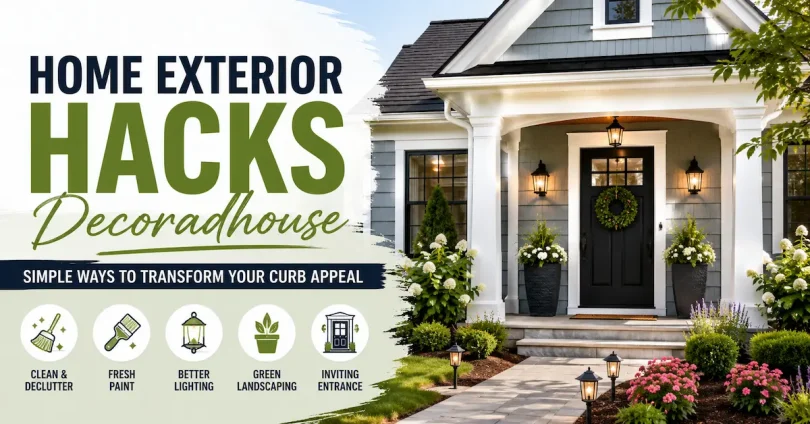

The best home exterior hacks Decoradhouse ideas focus on cleaning, repairing, coordinating, and improving the most visible parts of your property. You do not need to replace the siding, rebuild the porch, or invest in a complete exterior renovation to make your home look more welcoming.
Start by fixing visible damage and removing clutter. Then improve the front entrance, lighting, landscaping, walkways, and exterior finishes in a logical order. A few coordinated updates usually create a better result than filling the space with decorations.
Start With a 10-Minute Exterior Audit

Before buying paint, lights, furniture, or plants, stand across the street and look at your property as a visitor would.
Take a clear photograph in daylight. A photo often reveals problems that become easy to ignore when you see the house every day.
Look for:
- Peeling or faded paint
- Dirty siding and windows
- Overgrown plants
- Broken planters
- Crooked house numbers
- Mismatched exterior finishes
- Cracked paths or steps
- Loose railings
- Overflowing gutters
- Clutter around the porch
- Poor lighting near the entrance
- Bins, hoses, and tools left in view
Separate your findings into three categories:
- Repair: Damage, safety issues, drainage problems, or failing materials
- Clean: Dirt, algae, stains, cobwebs, and neglected surfaces
- Improve: Paint, lighting, landscaping, furniture, and decorative details
Always address repairs before cosmetic upgrades.
You may also like it:
Upgrading Tips DecorAdHouse: The Complete Guide
Renovation Tips Decoradhouse: Smart Ideas to Transform Homes
Repair Problems Before Decorating
Exterior decorations cannot hide poor maintenance for long. A freshly painted door will not improve the property if the surrounding trim is rotting or the steps feel unsafe.
Inspect the exterior for:
- Soft or rotten wood
- Cracked or missing caulk
- Loose siding
- Damaged steps
- Unstable handrails
- Leaking gutters
- Water collecting near the foundation
- Exposed electrical wires
- Broken light fixtures
- Mold, mildew, or pest damage
Some problems require professional attention. Hire a qualified contractor or tradesperson for structural damage, electrical wiring, roof repairs, serious drainage issues, garage door mechanisms, or work that requires unsafe ladder use.
Older homes may also contain lead-based paint or other hazardous materials. Do not sand, scrape, or pressure-wash an unknown coating without checking the appropriate safety requirements for your location.
Choose Improvements Based on Impact
Not every exterior project deserves equal attention. Focus first on areas people naturally notice when approaching the house:
- The walkway
- The front steps
- The entrance
- The front door
- Exterior lighting
- Windows
- Landscaping
- The garage door
- Visible siding and trim
Use the following table as a planning guide. Costs are broad estimates and may vary by location, property size, condition, materials, and labor.
| Exterior improvement | Estimated budget | Time needed | Difficulty | Visual impact |
| Remove clutter and trim plants | Free to low | 1 to 3 hours | Easy | High |
| Clean windows and fixtures | Low | 1 to 3 hours | Easy | Medium |
| Paint the front door | Low to moderate | Half a day | Moderate | High |
| Replace house numbers | Low | Under 1 hour | Easy | Medium |
| Add planters | Low to moderate | 1 to 2 hours | Easy | High |
| Update porch lighting | Moderate | Varies | Professional help may be needed | High |
| Repair and repaint trim | Moderate | One weekend or more | Moderate | High |
| Improve a walkway | Moderate to high | One weekend or more | Moderate | High |
| Repaint the full exterior | High | Several days | Professional work often preferred | Very high |
Remove Visual Clutter First
One of the cheapest curb appeal improvements is simply removing items that make the exterior look crowded or neglected.
Clear away:
- Empty plant pots
- Broken furniture
- Faded decorations
- Unused tools
- Tangled hoses
- Dead plants
- Excessive signs
- Old doormats
- Packages and storage boxes
Store waste bins where they are accessible but not visually dominant. Use a hose reel or storage container to keep gardening equipment organized.
A cleaner exterior makes every later improvement more noticeable.
Clean the Exterior Carefully
Dirt can make siding, stone, concrete, windows, and paint appear older than they are. Cleaning may restore enough color and brightness to delay more expensive work.
Suitable cleaning tasks may include:
- Washing windows
- Wiping light fixtures
- Cleaning the mailbox
- Removing cobwebs
- Sweeping the porch
- Scrubbing steps
- Cleaning gutters
- Washing outdoor furniture
- Removing algae from suitable surfaces
Be Careful With Pressure Washing
Pressure washing can damage certain types of siding, paint, mortar, wood, window seals, and electrical fixtures when used incorrectly.
Before using a pressure washer:
- Check the material manufacturer’s instructions
- Test a hidden section
- Use the lowest effective pressure
- Avoid spraying upward beneath siding
- Keep water away from electrical openings
- Do not stand on an unstable ladder
- Avoid directing strong water at windows, vents, or damaged surfaces
A soft-washing method or gentle hand cleaning may be safer for delicate materials.
Create a Simple Exterior Color Plan
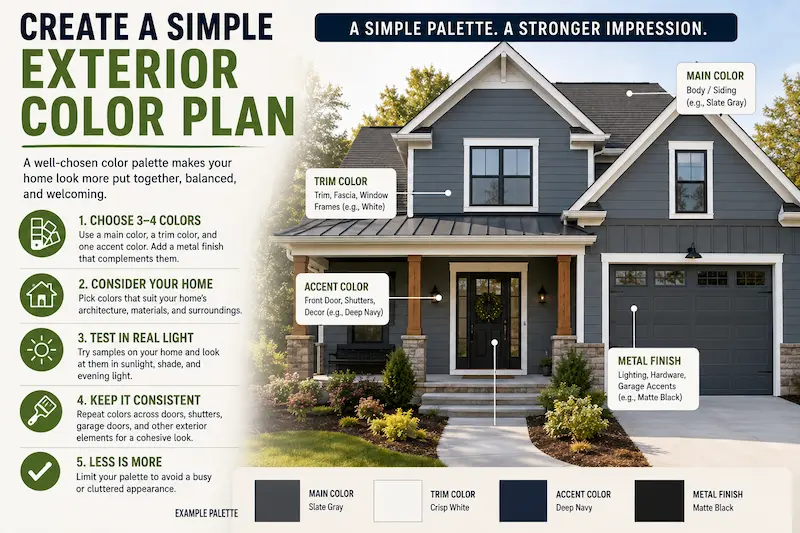
Many homes look untidy because too many unrelated colors and metal finishes compete for attention.
A basic exterior palette usually includes:
- One main body color
- One trim color
- One accent color
- One coordinated metal finish
The accent color may appear on the front door, shutters, planters, or selected architectural details. Hardware finishes may include black, bronze, brass, nickel, or another option that suits the house.
You do not need to make every item identical. The goal is visual consistency.
Before painting a large surface, test the color outdoors. Exterior paint can look very different in bright sunlight, shade, cloudy weather, and evening light.
Consider the style and existing materials of the property. A color combination that suits a modern home may feel out of place on traditional brickwork or a small cottage.
Make the Front Entrance the Main Feature
The entrance usually offers the best opportunity for a noticeable improvement without a large renovation.
Refresh the Front Door
If the door is structurally sound, clean it thoroughly and inspect it for cracks, peeling paint, rust, or damaged weather stripping.
A fresh coat of paint can make the entrance look cleaner and more intentional. Choose an exterior-grade product suitable for the door material and local climate.
Bold colors can work well when they complement the siding, brick, roof, and trim. However, no single door color guarantees a higher property value or better resale result.
Coordinate the Hardware
Inspect the:
- Door handle
- Knocker
- Lock
- Doorbell
- House numbers
- Mail slot
- Porch light
Replacing every item may not be necessary. Sometimes cleaning, tightening, repainting, or repositioning the existing hardware is enough.
Avoid mixing several unrelated finishes in a small entrance unless the combination looks deliberate.
Improve House Number Visibility
House numbers should be easy to read from the road in both daylight and low light.
Choose numbers that:
- Contrast with the background
- Suit the scale of the facade
- Use a simple, readable typeface
- Are installed in a straight line
- Remain visible after plants mature
Good visibility also helps visitors and delivery drivers locate the property.
Use Exterior Lighting for Safety and Style
Outdoor lighting should make entrances, steps, paths, and house numbers easier to see. It can also highlight attractive architectural or landscaping features.
A balanced plan may include:
- An entrance light
- Path or step lighting
- Motion-activated security lighting
- Soft landscape lighting
- Accent lighting for a tree or textured wall
Avoid installing too many bright fixtures. Excessive glare can make the house feel harsh and may disturb neighbors.
Warm white light often creates a comfortable residential appearance, while brighter task lighting may be useful near garages, side entrances, and work areas.
Hardwired lighting should be installed or repaired by a qualified person when local rules or the condition of the wiring require it. Exterior fixtures must also be suitable for outdoor exposure.
Improve Landscaping Without Creating More Work
Landscaping can frame a house, guide attention toward the entrance, and soften hard surfaces. The best design is not always the one with the most plants.
Start with structure:
- Define garden bed edges
- Remove weeds
- Prune overgrown shrubs
- Replace dead plants
- Add mulch where appropriate
- Repeat a small number of plant varieties
- Keep taller plants away from windows and house numbers
Choose plants suited to your local climate, sunlight, soil, and available maintenance time. Native or well-adapted plants may require less water and care than unsuitable ornamental varieties.
Keep vegetation away from siding, vents, roofs, and drainage outlets. Dense plants can trap moisture, block airflow, and make inspections more difficult.
Add Containers Strategically
Two coordinated planters near the entrance can make a stronger impression than many unrelated pots scattered across the porch.
Select containers that:
- Fit the size of the entrance
- Have drainage holes
- Suit the exterior color scheme
- Can tolerate local weather
- Are easy to move or maintain
Use seasonal plants only when you have time to replace and care for them.
Improve Walkways, Steps, and Driveways
The route from the street or driveway to the front door shapes the visitor’s first physical experience of the property.
Inspect the area for:
- Cracks
- Uneven surfaces
- Loose pavers
- Slippery algae
- Poor drainage
- Dark steps
- Overgrown edges
- Trip hazards
Small cracks may need sealing before they spread. Loose or uneven sections may require professional repair, especially when they create a safety risk.
Simple visual improvements include:
- Cleaning the path
- Trimming the edges
- Adding low path lighting
- Replacing damaged edging
- Removing weeds between pavers
- Repeating plants along the approach
Do not place decorations, pots, or lighting where they reduce the safe walking width.
Do Not Ignore the Garage Door
A garage door can occupy a large portion of the front facade. If it looks faded, damaged, or visually disconnected, it may weaken the appearance of the entire exterior.
Depending on its condition, consider:
- Cleaning it
- Touching up minor paint damage
- Repainting it with a suitable product
- Replacing worn weather seals
- Updating decorative handles
- Coordinating its color with the siding or trim
Do not attempt to repair springs, cables, tracks, or automatic mechanisms without proper training. Garage door systems can cause serious injury.
Decorative hardware should suit the architecture. It should not be added merely because it is fashionable.
Refresh Windows and Exterior Trim
Clean windows make the whole facade look brighter. Wash the glass, wipe the frames, and remove cobwebs from corners.
Inspect surrounding trim and caulking for:
- Peeling paint
- Gaps
- Soft wood
- Cracks
- Water stains
- Loose sections
Do not seal over active moisture damage. Identify and correct the source first.
Shutters should fit the scale and style of the windows. Decorative shutters that are too narrow, incorrectly positioned, or unsuitable for the architecture can make the exterior look less authentic.
Style the Porch Without Overcrowding It
A porch should feel usable and welcoming. It should not become an outdoor storage area or a display of every available decoration.
Choose furniture according to the available space. A small porch may need only:
- One chair
- A compact side table
- A doormat
- One or two planters
A larger porch may support a seating arrangement, outdoor rug, or bench.
Use materials designed for exterior conditions. Indoor furniture, untreated wood, and unsuitable fabrics may deteriorate quickly when exposed to rain, sunlight, or humidity.
Leave enough space for doors to open fully and for people to move safely.
Adapt Exterior Hacks to Your Climate
Exterior materials and colors perform differently depending on weather conditions.
Hot and Sunny Areas
Prioritize:
- UV-resistant paint
- Heat-tolerant plants
- Fade-resistant fabrics
- Shade where practical
- Reflective or lighter finishes when suitable
Dark colors can absorb more solar heat, although the final effect depends on insulation, wall materials, shading, and orientation.
Don’t skip reading it:
Decoradhouse Upgrade Tips by DecoratorAdvice
Decoradhouse Renovation Tips from DecoratorAdvice
Wet or Humid Areas
Focus on:
- Drainage
- Mold-resistant finishes
- Ventilation
- Rust-resistant hardware
- Plants that do not trap moisture against the house
- Regular gutter and siding inspections
Cold and Snowy Regions
Choose:
- Freeze-resistant containers
- Durable path materials
- Safe step surfaces
- Exterior products rated for low temperatures
- Plants suitable for winter conditions
Watch for freeze-thaw damage in concrete, masonry, and walkways.
Coastal Locations
Salt air can accelerate corrosion. Use appropriate exterior metals, protective coatings, and weather-resistant fixtures. Rinse salt deposits when recommended by the manufacturer.
Exterior Ideas by Budget
Free or Almost Free
- Remove clutter
- Rearrange existing furniture
- Trim plants
- Sweep the porch
- Clean windows
- Hide hoses and bins
- Remove dead leaves
- Straighten house numbers
Under $100
Depending on local prices, possible projects include:
- A new doormat
- Basic planters
- Door paint
- Replacement house numbers
- Updated mailbox paint
- Mulch for a small garden bed
- Solar path lights
- Cleaning supplies
From $100 to $500
This range may cover:
- Better-quality exterior lighting
- Multiple large planters
- Porch seating
- Minor trim repairs
- Small walkway improvements
- Professional cleaning
- Selected hardware replacements
Above $500
Higher-cost work may include:
- Extensive painting
- Siding repairs
- Drainage correction
- Major walkway replacement
- Professional landscaping
- New garage door panels
- Structural porch repairs
Get multiple quotes for larger projects and confirm exactly what the price includes.
Match the Upgrade to the House
Exterior changes should respect the building rather than forcing every home into the same trend.
Modern Homes
Use clean lines, limited colors, simple lighting, uncluttered landscaping, and restrained hardware.
Traditional Brick Homes
Work with the brick color instead of trying to overpower it. Coordinated trim, classic lighting, and a carefully chosen door color may be enough.
Farmhouse-Style Homes
Natural textures, simple planters, warm lighting, practical seating, and restrained black or galvanized finishes can work well.
Cottages
Smaller-scale furniture, layered planting, softer colors, and charming but limited decorative details usually suit the architecture.
Rental Properties
Choose reversible changes such as:
- Freestanding planters
- Outdoor rugs
- Removable lighting
- Furniture
- Seasonal flowers
- Temporary storage solutions
Get the property owner’s permission before painting, drilling, or changing fixed fixtures.
Know When to Call a Professional
Do-it-yourself projects can save money, but only when the work is suitable for your skills and equipment.
Professional help is often appropriate for:
- Hardwired electrical work
- Roof repairs
- High gutter work
- Structural wood damage
- Serious drainage problems
- Foundation cracks
- Unstable steps or railings
- Garage door mechanisms
- Lead paint or hazardous coatings
- Large siding repairs
Do not choose DIY work simply because a competitor describes it as easy. Consider the height, tools, weather, material condition, and consequences of a mistake.
Three Practical Upgrade Plans
One-Day Exterior Refresh
Complete these tasks in order:
- Remove porch and yard clutter
- Sweep and clean the entrance
- Wash accessible windows
- Trim overgrown plants
- Straighten house numbers
- Clean the mailbox and light fixtures
- Add one coordinated planter or doormat
Weekend Curb Appeal Upgrade
A realistic weekend plan may include:
- Complete the one-day cleaning tasks
- Prepare and paint the front door
- Replace worn house numbers
- Edge garden beds
- Add mulch
- Improve planters
- Install simple non-wired path lighting
- Touch up minor paint damage
Allow enough drying time for paint and follow all product instructions.
30-Day Exterior Improvement Plan
Week 1: Inspect, clean, remove clutter, and gather estimates
Week 2: Complete repairs and prepare surfaces
Week 3: Improve the entrance, lighting, and hardware
Week 4: Refine landscaping, walkways, and porch styling
This approach prevents rushed decisions and makes it easier to control spending.
Common Exterior Upgrade Mistakes
Avoid these problems:
Decorating Before Repairing
Paint and accessories cannot solve moisture damage, rot, cracks, or unsafe wiring.
Using Too Many Colors
A busy palette makes the exterior feel disconnected. Choose a small, coordinated combination.
Choosing Plants for Appearance Alone
Consider mature size, roots, water needs, sunlight, and local weather.
Using Excessive Water Pressure
Aggressive cleaning can damage paint, siding, mortar, wood, and seals.
Blocking Drainage
Do not place soil, mulch, planters, or decorations where they trap water against the building.
Installing Fixtures at the Wrong Scale
Tiny lights can look lost on a large facade. Oversized fixtures can overwhelm a small entrance.
Copying Trends Without Considering Architecture
A popular material or color may not suit every building.
Ignoring Maintenance
Every planter, painted surface, fixture, and piece of outdoor furniture will require some level of care.
Keep the Exterior Looking Good
A simple maintenance schedule protects the money and effort you invest.
Monthly
- Remove litter and dead leaves
- Check exterior lights
- Sweep entrances
- Look for new stains or damage
- Keep house numbers visible
Seasonally
- Clean accessible windows
- Inspect gutters and drainage
- Trim plants
- Check outdoor furniture
- Look for peeling paint
- Examine caulking around doors and windows
Annually
- Inspect siding and trim
- Check steps and railings
- Review drainage after heavy rain
- Clean suitable exterior surfaces
- Check fences, gates, and garage doors
- Plan necessary repairs before decorating
Frequently Asked Questions
What is the cheapest way to improve curb appeal?
Start by removing clutter, cleaning windows, sweeping the porch, trimming overgrown plants, and organizing bins and hoses. These tasks cost little or nothing but can create an immediate improvement.
Which exterior project should come first?
Correct safety, moisture, structural, and drainage problems first. After repairs, clean the exterior before spending money on paint, lighting, landscaping, or furniture.
How much does a basic exterior refresh cost?
The cost depends on the property and location. A simple cleaning and styling project may require only a small budget, while painting, repairs, lighting, and landscaping can cost considerably more. Treat online prices as planning estimates rather than guaranteed rates.
Can exterior paint increase home value?
Fresh, well-coordinated paint may improve buyer perception, but no specific color guarantees a higher selling price. Condition, location, workmanship, market demand, and the overall presentation of the property matter more than a single paint choice.
Are solar lights suitable for every walkway?
Solar lights work best in areas that receive enough sunlight to charge them. Their brightness and operating time vary by product, season, weather, and placement. Use properly installed wired lighting where dependable illumination is essential.
Which home exterior hacks are best for renters?
Use reversible improvements such as planters, outdoor rugs, movable furniture, freestanding lighting, and organized storage. Ask for permission before painting or changing permanent fixtures.
Final Thoughts
Successful home exterior hacks Decoradhouse projects do not begin with buying more decorations. They begin with inspection, repair, cleaning, and a clear plan.
Fix visible problems first. Remove clutter. Coordinate the entrance, lighting, landscaping, and finishes. Then choose improvements that match your budget, climate, property style, and maintenance capacity.
A clean, safe, and well-maintained exterior will usually look better than an overcrowded one, even when the total budget is modest.