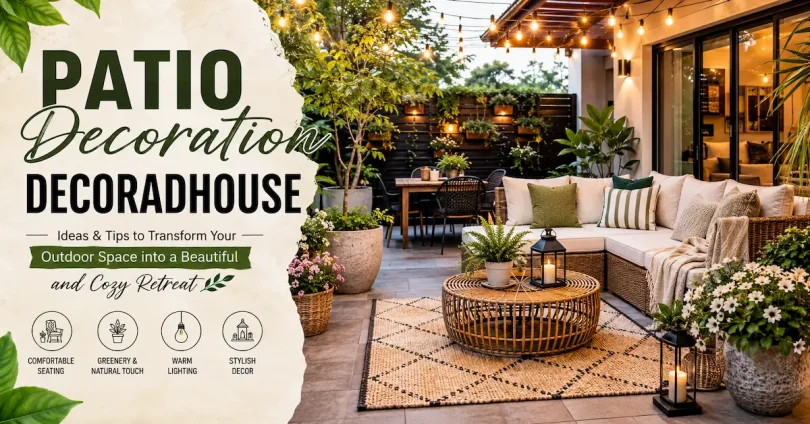

A patio can look attractive in photos and still be awkward to use. The best outdoor spaces balance comfort, movement, shade, lighting, privacy, weather resistance, and a few decorative details that actually suit the way the space is used.
Direct Answer: Patio decoration Decoradhouse works best when you first decide how the patio will be used, then build the layout around correctly sized furniture, practical lighting, weather-suitable materials, plants, shade, and a controlled color palette. You do not need to fill every corner or replace everything at once. A few coordinated upgrades can make even a small or inexpensive patio feel finished.
Start With the Patio, Not the Shopping Cart
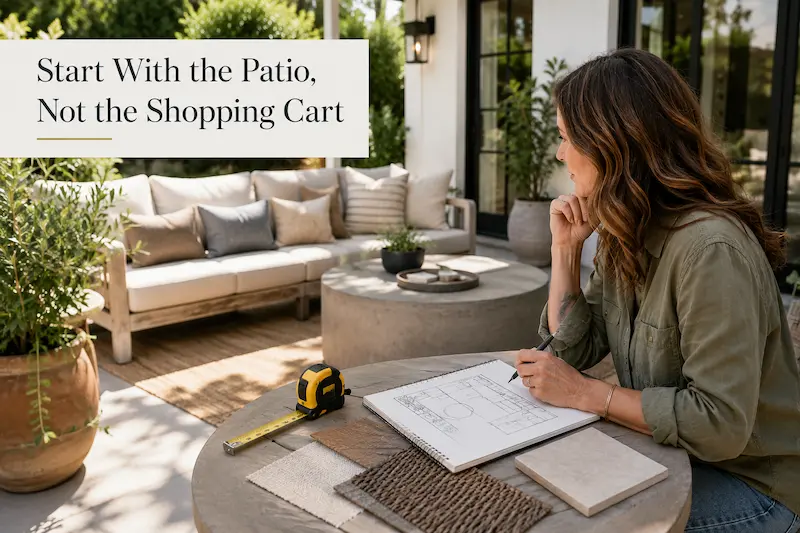
Before buying furniture or accessories, spend a few minutes looking at how the space behaves during a normal day.
Measure the usable floor area, then note doors, steps, drains, outdoor taps, electrical outlets, air-conditioning units, and anything else that furniture should not block.
Pay particular attention to three things:
- Sun exposure: Where does direct sunlight fall in the morning and afternoon?
- Wind: Which corners become uncomfortable on breezy days?
- Movement: How do people naturally walk between the house, garden, grill, pool, or driveway?
These details often matter more than the latest patio trend.
A large sofa may look perfect online but become frustrating if everyone has to squeeze past it to reach the back door. Likewise, placing a dining table directly over a drain or beneath constant roof runoff creates problems no amount of decorating will fix.
A useful trick is to mark furniture dimensions on the floor with painter’s tape or cardboard before ordering anything. You will see very quickly whether a piece is realistically sized for the space.
Decide What the Patio Needs to Do
One patio does not have to perform every outdoor function.
For a compact space, choose one main purpose. Trying to fit a lounge, dining room, garden, fire area, and outdoor kitchen into a small patio usually creates clutter.
Think about the activity that happens most often.
For morning coffee: prioritize a small table, comfortable chairs, morning shade, and nearby plants.
For family meals: give the dining table the best level area and leave enough room for chairs to pull back.
For entertaining: flexible seating, side tables, layered lighting, and open circulation matter more than decorative objects.
For quiet evenings: comfortable lounge seating, privacy, softer lighting, and fewer visual distractions usually work better.
Large patios can support several functions, but each zone should have a clear purpose.
You may also like it:
Renovation Tips Decoradhouse: Smart Ideas to Transform Homes
Decoradhouse Upgrade Tips by DecoratorAdvice
Choose a Color Palette Before Adding Accessories
Random cushions, pots, rugs, furniture finishes, and wall decorations can make an outdoor area feel busy surprisingly quickly.
A simple color plan keeps everything connected.
Start with one dominant base, such as:
- warm beige
- soft gray
- charcoal
- cream
- natural wood
Add one supporting color and one smaller accent.
Practical combinations include:
Cream + natural wood + olive green
This works especially well with leafy planting and woven furniture.
Charcoal + tan + muted rust
A good option for modern patios with metal furniture.
White + blue + natural wicker
Useful for a lighter coastal look.
Sand + terracotta + deep green
This suits patios with clay pots and warm paving.
The accent does not need to appear everywhere. Two cushions, a planter, and a small decorative object may be enough.
Build the Seating Layout Around Real Measurements
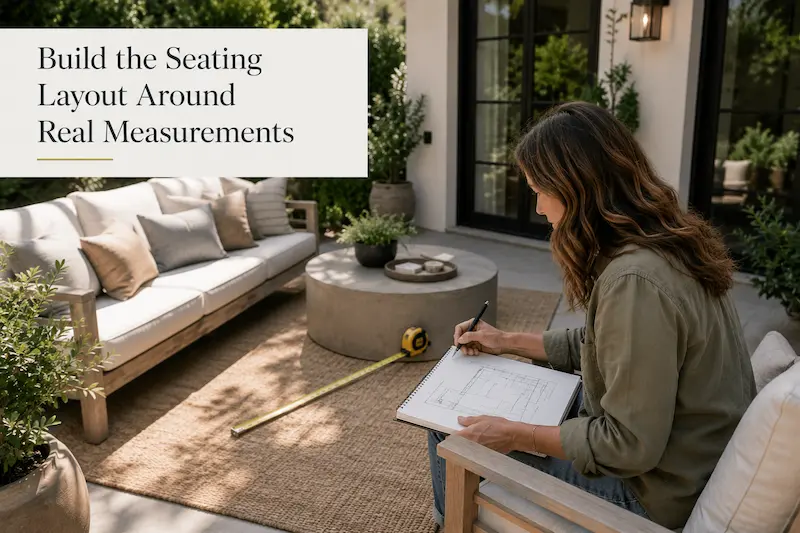
Furniture scale makes a bigger visual difference than the number of decorative pieces you own.
For a Very Small Patio
Keep the center visually open.
Good options include:
- two slim chairs and a small round table
- a folding bistro set
- a compact bench against a wall
- nesting side tables
- wall-mounted or vertical planting
Avoid deep lounge furniture unless the patio is wide enough to maintain comfortable circulation.
For a Medium Patio
A medium space can usually handle a conversation arrangement without feeling crowded.
Try:
- a loveseat
- two individual chairs
- one coffee table
- one side table
Place the seating so people can talk without having to turn their chairs constantly.
For a Large Patio
Break the floor into functional zones instead of pushing all furniture against the edges.
For example:
- lounge seating near the house
- dining farther from the main doorway
- grilling in a ventilated working area
- a quieter seating corner near planting
Outdoor rugs, large planters, lighting, or changes in furniture orientation can define these zones without building permanent walls.
Leave Enough Space to Move Comfortably
A patio should not feel like an outdoor furniture showroom.
People need room to pull out chairs, carry food, open doors, move around tables, and walk through the space without turning sideways.
When planning the layout, test real movements rather than judging the patio only from a photograph.
Open the exterior door fully. Pull the dining chairs back. Walk from the kitchen to the table while pretending to carry a tray. Check whether someone sitting down blocks the main pathway.
These small tests reveal layout problems early.
They are particularly useful for households with children, older family members, or frequent guests.
Use an Outdoor Rug to Control the Visual Area
An outdoor rug can make furniture feel connected, especially when seating is sitting on a large concrete or paved surface.
Size matters.
A rug that floats alone underneath a coffee table can make the furniture look disconnected. Whenever space allows, let at least the front legs of the main seating pieces sit on the rug.
Choose materials made for outdoor conditions rather than moving a regular indoor rug outside.
Also check what happens underneath it.
A permanently damp rug over poorly drained concrete can trap moisture and dirt. On exposed patios, choose a quick-drying option and lift it periodically for cleaning.
Layer Lighting Instead of Relying on One Bright Fixture
Outdoor lighting has several jobs, and a single wall light rarely handles all of them well.
Think in layers.
Safety Lighting
Illuminate:
- steps
- level changes
- pathways
- entrances
- cooking areas
These lights should make hazards easy to see.
General Lighting
Wall fixtures or overhead lighting can provide enough visibility for dining and entertaining.
Decorative Lighting
String lights, portable lanterns, small table lamps, and subtle landscape lights create atmosphere after the practical lighting is handled.
Avoid turning the patio into an airport runway with dozens of bright solar lights.
A few deliberately positioned lights usually look better than identical fixtures placed around every edge.
Also consider what the lights look like from inside the house. A fixture that shines directly into a bedroom window may become annoying very quickly.
Add Plants According to the Patio’s Microclimate
A plant label may say “full sun,” but one patio can contain several different growing conditions.
A south-facing wall may become extremely hot, while a roofed corner a few feet away stays shaded and damp.
Observe the patio before choosing plants.
Consider:
- hours of direct sunlight
- reflected heat from walls and paving
- wind exposure
- rainfall
- container drainage
- how often someone can realistically water them
Use larger containers when you want a stronger visual statement. Ten tiny pots scattered across the floor often create more maintenance and more clutter than two or three substantial planters.
Vertical planting is especially useful when floor space is limited.
A trellis, plant stand, wall planter, or tall narrow container gives you greenery without taking over the walking area.
Create Privacy Without Turning the Patio Into a Box
Privacy does not always require a solid fence.
First identify exactly where the unwanted view comes from.
If only one neighboring window overlooks the seating area, screening the entire perimeter may be unnecessary.
More flexible options include:
- tall container plants
- climbing plants on a trellis
- slatted screens
- freestanding outdoor panels
- curtains around a covered structure
- layered planting at different heights
Partial screening often feels more comfortable than closing every side.
It can also preserve airflow, natural light, and views you actually want to keep.
For renters, freestanding screens and large planters are useful because they can usually leave with you when you move.
Add Shade Where People Actually Sit
Shade placement should follow the sun, not simply the center of the patio.
A fixed umbrella placed perfectly at noon may provide little help at 4 p.m. when sunlight arrives from a lower angle.
Observe the area at the times you normally use it.
Depending on the space, practical choices can include:
- adjustable umbrellas
- shade sails
- retractable awnings
- pergolas
- outdoor curtains
- strategically positioned trees or tall planting
For very hot patios, shade also protects cushions and furniture from constant exposure.
Do not block every bit of sunlight automatically. Cooler or shaded properties may benefit from keeping part of the patio open and sunny.
Make the Dining Area Easier to Use
Outdoor dining works better when convenience influences the layout.
Place the table where carrying plates and drinks from the kitchen does not require navigating an obstacle course.
Leave room behind chairs and avoid positioning frequently used seats directly in front of exterior doors.
For small patios, round tables can be easier to move around than large rectangular ones.
A bench can also save space along a wall, although individual chairs offer more flexibility when guests arrive.
Keep a small surface nearby for serving dishes, drinks, or grilling tools. This prevents the dining table from becoming overcrowded before anyone sits down.
Choose Accessories That Earn Their Space
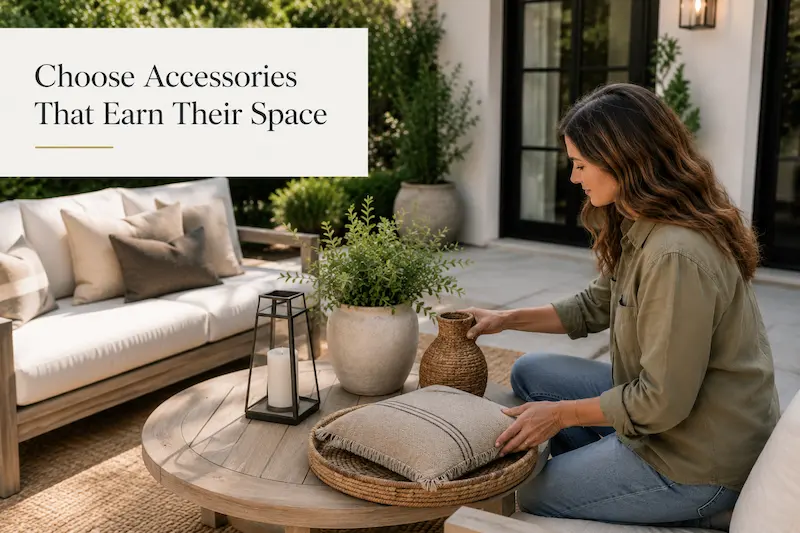
Outdoor accessories should contribute either comfort, function, or personality.
Useful choices include:
- washable cushions
- weather-resistant throws
- lanterns
- decorative trays
- planters
- outdoor-safe artwork
- side tables
- storage baskets designed for protected areas
One of the easiest patio mistakes is treating every empty surface as a decorating opportunity.
Leave some space untouched.
An empty corner can make the nearby furniture and planting look more intentional.
Before buying a decorative item, ask one question:
Where will this go when bad weather arrives?
If there is no good answer, it may become another object that constantly needs moving.
Make a Small Patio Feel Larger
Small outdoor areas benefit from visual discipline.
Choose furniture with slimmer legs or open frames so more of the floor remains visible.
Then use height rather than width.
Tall plants, vertical gardens, narrow shelving, climbing vines, and wall-mounted elements draw the eye upward without consuming valuable floor area.
Keep flooring transitions limited. Using several rugs, furniture styles, and planter finishes in a tiny space can visually divide it into even smaller pieces.
A restrained palette and fewer, larger objects often create a calmer result.
Mirrors are sometimes recommended outdoors, but placement needs care. Strong reflected sunlight, birds, weather exposure, mounting requirements, and neighboring sightlines should all be considered before using one.
Don’t skip reading it:
Garden Tips Decoradhouse: Practical Ideas for Every Yard
Decoration Tips Decoradhouse From DecoratorAdvice Guide
Home Exterior Hacks Decoradhouse for Curb Appeal
Use Budget Where It Changes the Space Most
A patio makeover does not need to happen in one shopping trip.
Spend first on whatever affects comfort and usability most.
| Example Budget | Where the Money Usually Has the Most Impact |
| Under $100 | Cushion covers, small plants, simple lighting, cleaning supplies |
| $100 to $300 | Outdoor rug, larger planters, lighting, side table |
| $300 to $750 | Better seating, dining pieces, shade solution, storage |
| $750+ | Major furniture replacement, substantial shade structure, multiple functional zones |
These are planning ranges, not fixed retail prices. Existing furniture, patio size, local prices, and DIY work can change the total significantly.
For a limited budget, resist spreading money across twenty small purchases.
One comfortable seating upgrade and one strong planter may improve the space more than a cart full of inexpensive decorations.
Refresh Existing Pieces Before Replacing Them
Older patio furniture is not automatically unusable.
Inspect the frame first.
If the furniture is structurally sound, changing cushion covers, cleaning the material, replacing worn hardware, or refinishing an appropriate surface may be enough.
The same principle applies to planters and tables.
Moving pieces into a better layout can even change the appearance without spending anything.
Deep cleaning should come before decorating. Dirt, algae, faded leaves, empty pots, broken lights, and unnecessary storage can make a patio look neglected even when the furniture itself is good.
Plan for Wind Before Decorating Exposed Patios
Wind receives surprisingly little attention in patio design.
Light cushions, tablecloths, small pots, decorative signs, and umbrellas can become frustrating on exposed balconies, rooftops, coastal properties, or open yards.
Use heavier planters and stable furniture where wind is common.
Secure lightweight accessories and close umbrellas when they are not being used.
A decorative privacy screen also needs proper stability. A large flat panel can catch significant wind, so freestanding pieces should be used according to their design and installation requirements.
For windy patios, fewer substantial accessories are usually easier to live with than many lightweight ones.
Adapt Materials to Your Climate
There is no single best patio material for every home.
Hot, Sunny Conditions
Look for:
- UV-resistant outdoor fabrics
- reliable shade
- surfaces that are comfortable in strong sun
- planting suited to heat
- furniture finishes appropriate for exposure
Dark metal surfaces can become uncomfortable in direct summer sunlight, so consider where people will actually touch or sit.
Wet or Humid Conditions
Prioritize:
- quick-drying cushions
- good drainage
- suitable outdoor rugs
- furniture that tolerates moisture
- airflow around stored textiles
Avoid pushing furniture so tightly against walls that damp areas cannot dry.
Cold or Seasonal Climates
Think about storage before purchasing large amounts of furniture.
Stackable chairs, removable cushions, furniture covers, and planters suited to local winter conditions can make seasonal changes easier to manage.
The attractive summer setup matters, but so does where everything goes in January.
Make Rental Patios Feel Personal Without Permanent Changes
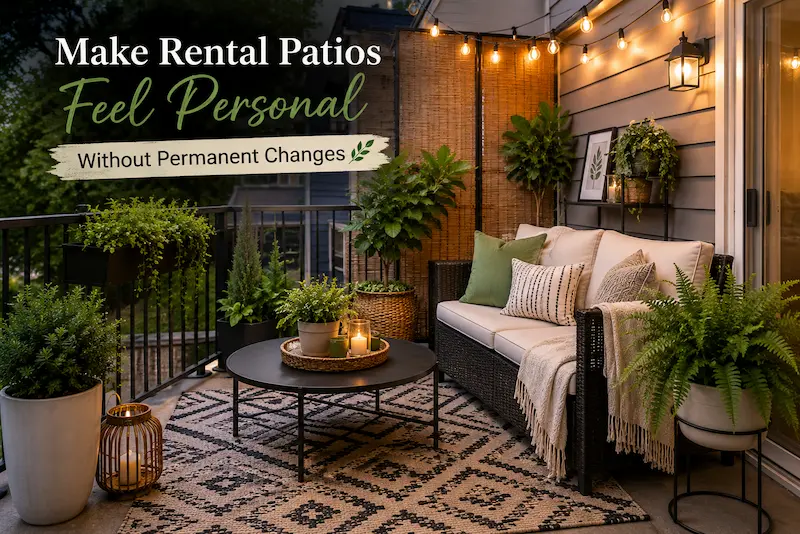
A rental patio can still have a strong identity.
Use items that stand independently rather than attaching everything to walls or floors.
Good options include:
- freestanding planters
- folding furniture
- outdoor rugs
- portable lanterns
- freestanding privacy screens
- removable cushion covers
- movable shade solutions
- plant stands
Before drilling, mounting lights, installing a screen, or making structural changes, check the lease or ask the property owner.
This protects both your deposit and your decorating budget.
Make Family Patios Easier to Live With
A family patio should survive everyday life, not just look polished when nobody is using it.
Choose washable textiles and furniture surfaces that are easy to wipe down.
Keep unstable objects away from busy routes and avoid placing fragile decorations at the edge of low tables.
For homes with young children, look carefully at steps, water features, fire features, sharp corners, gates, cords, and furniture stability.
Pets add another layer.
Check plant suitability for the animals in your household, provide shade and water where appropriate, and avoid arranging delicate pots where an excited dog regularly runs.
Keep the Space Visually Expensive Without Overspending
An expensive-looking patio usually comes from consistency rather than expensive labels.
Start by reducing visible clutter.
Then repeat a few materials or colors.
For example, matching black planters with black light fixtures creates more visual connection than five unrelated decorative styles.
Other low-cost improvements include:
- replacing faded cushion covers
- grouping plants instead of scattering them
- hiding hoses and tools
- using one adequately sized rug
- keeping furniture aligned
- cleaning paving and edges
- removing damaged decorations
Scale matters too.
One larger planter can often look more intentional than several tiny decorative containers.
Do Not Forget Storage
Outdoor clutter can undo a carefully planned patio quickly.
Before adding accessories, decide where these everyday items will live:
- cushions
- children’s toys
- gardening tools
- grill accessories
- watering equipment
- furniture covers
- outdoor cleaning products
A storage bench can serve two purposes when floor space is limited.
For larger patios, a weather-appropriate storage box may work better.
Do not automatically store damp cushions in a closed container. Allow wet textiles to dry first so they do not sit trapped with moisture.
Use Seasonal Changes Instead of Redecorating Everything
You do not need a different patio for every season.
Keep the expensive elements neutral, then change a small layer of details.
For warmer months, that might mean fresh cushion covers, flowering containers, and lighter textiles.
During cooler weather, use deeper-toned accessories, appropriate outdoor throws in protected spaces, or seasonal plants suited to local conditions.
Store the previous items rather than stacking new decorations on top of them.
This keeps the patio from becoming crowded as the year progresses.
Maintain the Patio in Small Sessions
A good patio becomes easier to maintain when cleaning is part of the design.
Every few weeks during active use, check the things that deteriorate fastest:
- sweep or wash the flooring as appropriate
- clean outdoor tables
- remove dead plant material
- empty standing water where appropriate
- inspect cushions
- wipe light fixtures
- check planters for drainage problems
- remove unused objects
At the start and end of each main outdoor season, inspect furniture hardware, covers, shade equipment, and other frequently exposed pieces.
The goal is not to keep the patio spotless. It is to catch small problems before they become expensive ones.
Common Patio Decoration Mistakes to Avoid
A few mistakes repeatedly make outdoor spaces harder to use.
Buying furniture before measuring: The piece may technically fit but leave no comfortable walking room.
Using too many small accessories: The eye has nowhere to rest.
Ignoring afternoon sun: A beautiful seating area can become unusable during the exact hours you want it.
Choosing indoor materials for exposed areas: Outdoor conditions are harder on fabrics, rugs, lighting, and furniture.
Blocking drainage: Planters, rugs, and storage should not interfere with water movement.
Forgetting where accessories will be stored: Bad weather then turns decorating into constant moving and carrying.
Decorating around an awkward layout instead of fixing it: Move the furniture first. Accessories come later.
A Practical Final Check
Before calling the patio finished, sit in every main seat.
Look around from that position rather than only standing at the doorway.
Can you put down a drink? Is there shade when you need it? Can people pass comfortably? Does lighting reach the steps? Are the best plants visible from the seats? Is anything constantly in the way?
That five-minute test often reveals more than another hour of shopping.
FAQs About Patio decoration Decoradhouse
Can I decorate a patio that has a sloped floor?
Yes, but do not try to hide a drainage slope with unstable furniture adjustments. Use furniture designed to sit securely on the surface, and address significant unevenness or structural concerns before adding decorative elements.
What can I put on a blank brick patio wall?
Outdoor-safe wall art, a trellis, wall-mounted planters, or lighting can work well where installation is appropriate. Check the wall condition, mounting method, weather exposure, and property restrictions before drilling into masonry.
Is an uncovered patio harder to decorate?
It requires more attention to weather resistance because furniture, textiles, lights, and accessories receive more direct sun and rain. Limit items that constantly need to be brought indoors.
How should I decorate a patio beside a swimming pool?
Use slip-conscious walking surfaces, keep pathways clear, choose materials suitable for frequent splashing, and avoid fragile accessories near active areas. Furniture placement should never obstruct safe movement around the pool.
What can I do with a very narrow patio?
Use a bench or shallow seating along one side, narrow tables, vertical plants, and wall-based features where suitable. Preserve one continuous walking route rather than placing furniture on both sides.
Can outdoor lights stay outside all year?
Only use lighting designed and rated for the conditions where it will be installed. Follow the manufacturer’s installation requirements, particularly for electrical connections and exposed locations.
How do I decorate a patio with no garden around it?
Create greenery with containers at different heights, but you do not need to imitate a full garden. A few substantial plants paired with an outdoor rug, comfortable seating, and deliberate lighting can give a hard-surfaced patio enough visual softness.